
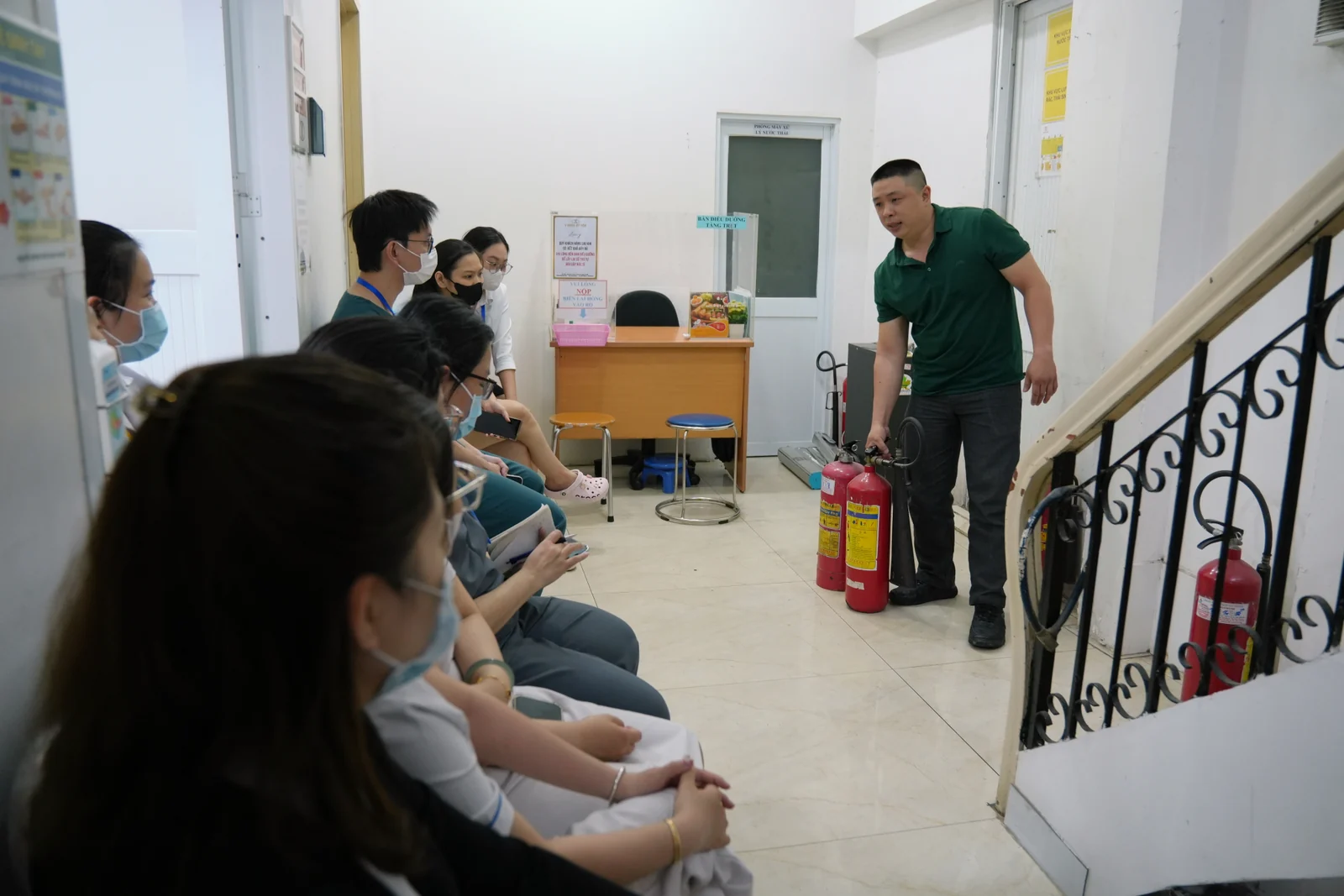
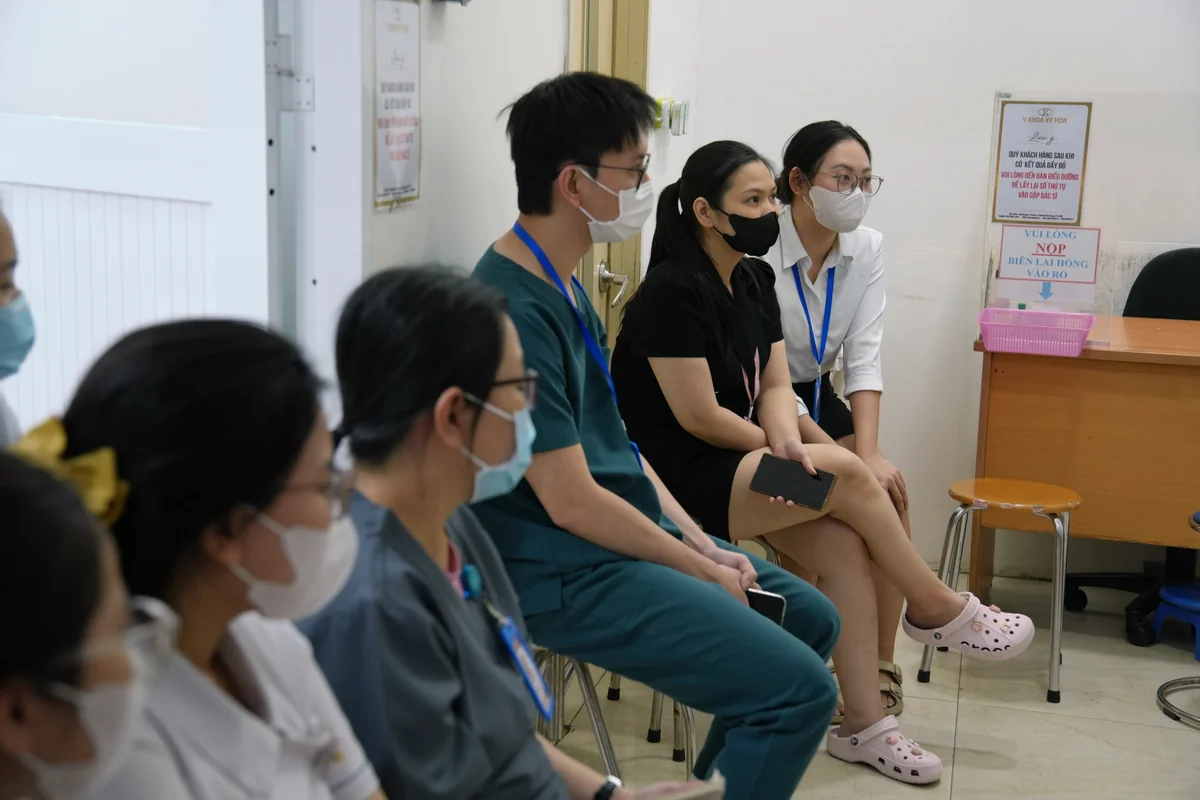
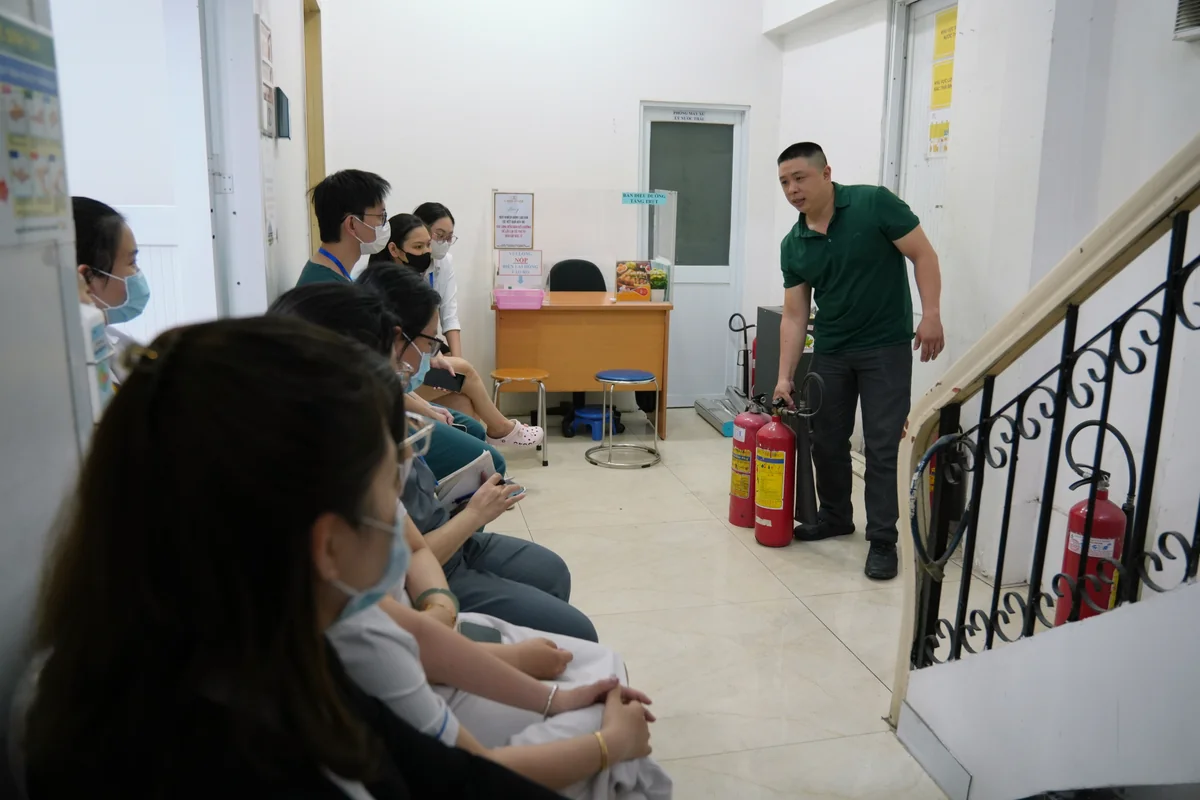
On October 16, 2026, Ky Hoa Medical Center organized a fire prevention and fighting (PCCC) training session for all staff members. The activity aimed to raise awareness, reinforce emergency response skills, and ensure the safety of patients, their relatives, and the medical team at the center.
The following article summarizes the main content of the training session along with practical fire prevention and fighting knowledge that everyone should know when visiting or working at a medical facility.
Why is fire prevention and fighting especially important at medical facilities?
Compared to many other types of facilities, medical facilities have particular characteristics that make fire prevention and fighting work require more thorough preparation:
- Large numbers of people entering and exiting every day: patients, family members, and staff are all present in enclosed spaces that change frequently.
- Patients may have limited mobility: elderly people, those undergoing treatment, young children, or people with disabilities need assistance when evacuating.
- Many electrical and medical devices operate continuously: if not operated and maintained properly, the risk of electrical short circuits and overloads increases.
- Supplies, chemicals, and medical gases need strict management: requiring proper storage and use in accordance with regulations.
- Short response time: in the event of an incident, every minute matters for the patient's life.
Therefore, fire prevention and fighting at medical facilities is not only a mandatory requirement under the law but also a professional and ethical responsibility to the community.
Legal basis and responsibilities of medical facilities
Fire prevention and fighting work in Vietnam is governed by a system of legal documents, including the Law on Fire Prevention, Fighting and Rescue, along with decrees and circulars providing guidance. Accordingly, each facility is responsible for:
- Developing regulations, fire prevention and fighting plans, and firefighting plans appropriate to the characteristics of the unit.
- Equipping, maintaining, and regularly inspecting fire prevention and fighting systems and equipment.
- Organizing training, professional instruction, and drills for employees.
- Ensuring unobstructed escape routes with clear signage.
The guiding principle throughout is "4 on-site": on-site command, on-site forces, on-site equipment, and on-site logistics. Organizing training is an important preparation step for the "on-site forces."
Main content of the training session
1. Basic knowledge of fire and fire prevention
A fire occurs when three elements are present simultaneously: heat source, combustible material, and oxygen. Removing any one of the three elements will control the fire. This is the fundamental principle of all fire prevention and firefighting measures.
Some common causes of fires at the workplace include:
- Electrical short circuits and overloads from plugging too many devices into one outlet.
- Old electrical equipment, damaged wiring, or poor connections.
- Placing flammable materials near heat sources.
- Smoking or using open flames in unauthorized areas.
- Improper storage of chemicals and compressed gases.
From this, staff were reminded of preventive habits in their daily work: checking electrical equipment before and after working hours, turning off unused devices, not blocking or placing obstacles in front of escape routes, keeping supplies neatly arranged, and immediately reporting any unusual signs such as burning smells, sparks, or abnormally hot equipment.
2. Identifying types of fires and appropriate firefighting equipment
Not all fires are handled the same way. Choosing the wrong equipment can make the situation more dangerous. Common types of fires include:
- Ordinary combustible material fires (paper, fabric, wood, plastic): water or a dry chemical extinguisher may be used.
- Flammable liquid fires (gasoline, oil, alcohol): use a dry chemical extinguisher or a CO₂ extinguisher; do not use water.
- Gas fires: the gas source must be shut off before firefighting if safety conditions allow.
- Fires involving energized electrical equipment: do not use water. Prioritize cutting off the power supply, then use a CO₂ or dry chemical extinguisher.
The two common types of portable fire extinguishers are dry chemical extinguishers and CO₂ extinguishers. Staff are instructed on how to identify the type of extinguisher via its label, its placement, and how to check the condition of the extinguisher (pressure gauge, pin, seal) before it is needed.
3. Skills for using on-site fire-fighting equipment
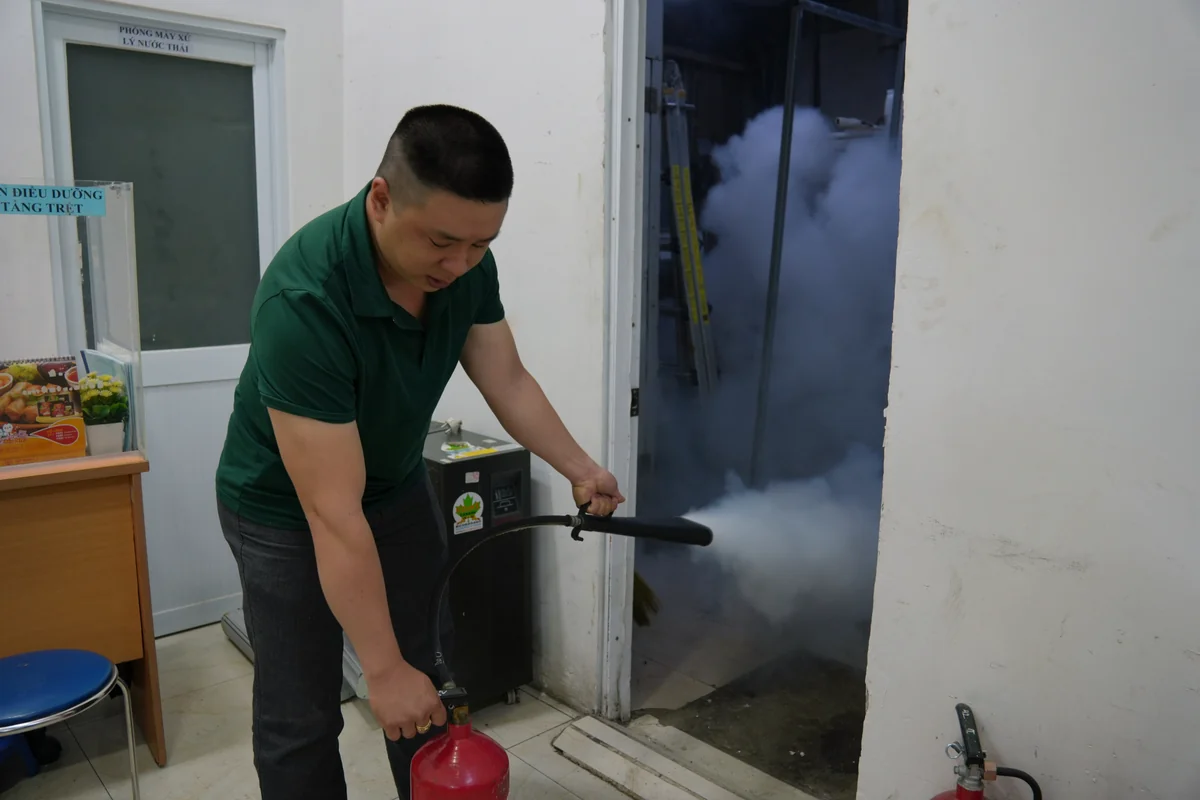
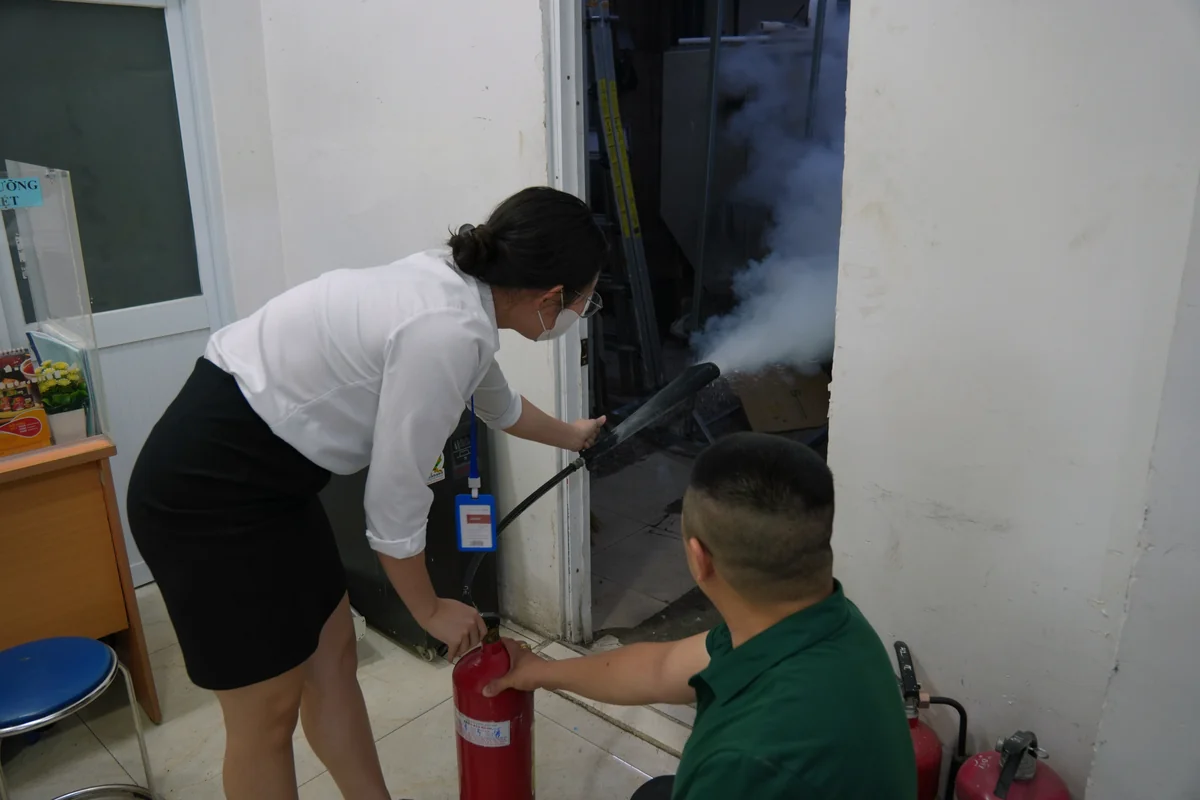
Using a portable fire extinguisher correctly can put out a fire right in its early stage. The basic steps are:
- Pull the safety pin of the extinguisher.
- Aim the nozzle at the base of the fire, not the flames.
- Squeeze the valve to discharge the extinguishing agent.
- Sweep from side to side, from the outside inward, until the fire is out.
Some important notes:
- Stand upwind and keep a safe distance from the fire.
- Always keep an escape route behind you when fighting the fire.
- If the fire does not diminish after a few seconds, stop and evacuate.
- After the fire is out, continue to monitor the area, as it may reignite.
4. Procedure when a fire is detected
When an incident is detected, acting quickly and in the correct order is the deciding factor:
- Shout an alarm and activate the fire alarm system so that everyone is aware.
- Call 114 (Fire Prevention and Rescue Police) and immediately notify the person in charge of the unit. When calling, state clearly the address, location of the fire, scale, and the condition of any victims.
- Disconnect the power supply in the at-risk area if safety conditions allow.
- Carry out initial fire-fighting if the fire is still small and you are not personally endangered.
- Evacuate according to the plan if the fire cannot be controlled; prioritize protecting human lives over property.
- Receive and guide the fire-fighting force when they arrive at the scene.
5. Evacuation skills and assisting patients
At a healthcare facility, evacuation is not only about protecting yourself but also about assisting patients, the elderly, children, and people with disabilities. Principles to remember:
- Move along the emergency exit signs, keep order, do not push or shove, and do not go back for belongings.
- Do not use elevators during a fire; prioritize the stairs for evacuation.
- Bend down low and cover your nose and mouth with a damp cloth when there is smoke, because smoke and toxic gases tend to accumulate above.
- Close the door behind you when leaving a room to limit the spread of smoke and fire.
- Check the temperature of the door before opening it; if the door is hot, do not open it and find another way out.
- Gather at the safe assembly point and report the headcount to the person in charge.
- When assisting patients, prioritize those who cannot move on their own; evacuate horizontally to a safe area before moving down to lower floors.
Guidance for patients and their families
Safety is everyone's responsibility, not just that of staff. When coming to the Center, patients and their families should:
- Observe the location of the emergency exits, stairs, and signs as soon as you enter the area.
- Do not smoke, use open flames, electric stoves, or bring your own heat-generating devices.
- Do not plug personal electrical devices into the Center's outlets on your own.
- Do not leave belongings blocking corridors or emergency exits.
- When you hear the alarm bell or an announcement, remain calm and follow the staff's instructions.
- If you notice smoke, a burning smell, or any unusual signs, report them immediately to the nearest staff member.
Prevention is better than cure: every staff member is a "safety checkpoint"
A fire can start from very minor oversights. When every staff member has the knowledge, skills, and proactive mindset, risks will be detected early and handled in time. That is why the Center considers fire prevention and fighting training an activity that must be maintained regularly, combined with periodic drills so that everyone becomes familiar with the procedure and is less caught off guard when a real situation occurs.
Commitment of Ky Hoa Medical Center
Alongside professional quality, Ky Hoa Medical Center always puts the safety of patients and the community first. We will continue to maintain training, drills, and periodic inspections of fire prevention and fighting equipment, in order to bring peace of mind to every customer who comes for examination and treatment.
Contact Ky Hoa Medical Center:
Address: 266A - 268 3 Thang 2 Street, Hoa Hung Ward, Ho Chi Minh City
Hotline: 028.3868.1097