

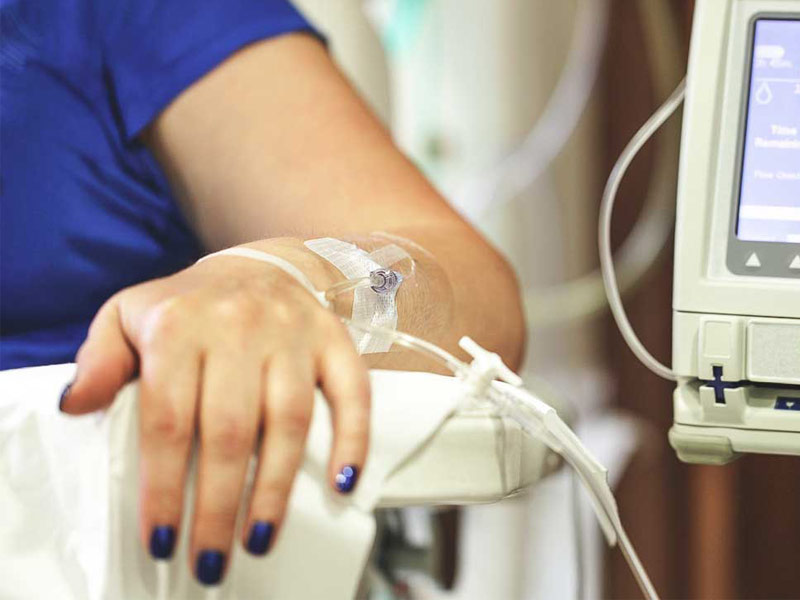
Advances in science have produced many different cancer treatments depending on the type and stage of the disease. Systemic chemotherapy nonetheless remains a targeted therapy that delivers positive results.
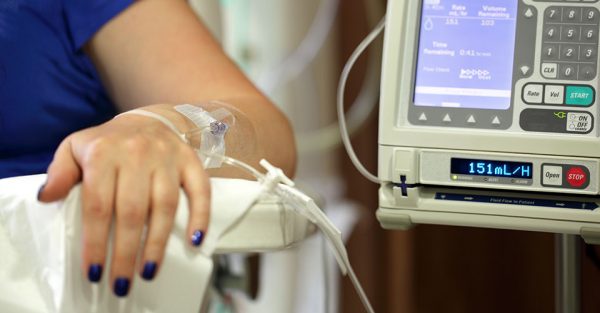
"Cancer" is a general term for many different diseases, depending on the organ affected (lung, liver, stomach, lymph nodes and so on) and the type of cell involved. What all cancers share is the uncontrolled proliferation of cells, usually forming a tumour and metastasising (spreading) through the body, and causing death through compression by a large tumour, necrosis, haemorrhage, infection or wasting.
With scientific progress there are now many cancer treatments, chosen according to the type and stage of disease. Systemic chemotherapy nonetheless remains a targeted therapy with positive results.
In treating cancer, when the disease is at an early stage or is operable, surgery is usually the main treatment. Radiotherapy is often used in certain cases because of the tumour's location (such as nasopharyngeal cancer or brain cancer) and serves to support surgery. Both surgery and radiotherapy are considered local treatments, useful when the disease is still confined or has spread only within a limited region.
When a patient's cancer is advanced and systemic - and cannot be treated with surgery or radiotherapy, as with leukaemia (blood cancer) or lymphoma (cancer of the lymph nodes) - chemotherapy is what makes partial or complete control possible. Chemotherapy delivers drugs into the body, usually intravenously or orally, and is regarded as a systemic measure. The drugs act on cells and kill cancer cells. Chemotherapy is most effective where cells divide frequently and rapidly, which is typical of cancer cells. However, it also kills the body's normal cells, particularly rapidly dividing ones such as mucosal cells and hair follicle cells. This is why patients on chemotherapy often experience hair loss or mouth ulcers.
Over the past 20 years there have been many advances in systemic cancer therapy. One is molecular targeted therapy, using monoclonal antibodies (inhibitor drugs). Most targeted drugs are more specific than conventional chemotherapy - that is, they kill tumour cells selectively while causing less toxicity to healthy cells, and they improve response rates dramatically. Molecular biology testing at some cancer treatment units in Vietnam can now diagnose certain mutations to guide targeted treatment. The most recent advance in cancer treatment is immunotherapy. In its earliest stage, a cancer cell is destroyed by the body's immune cells. Over time, however, cancer cells develop mechanisms to evade the immune system, and even exploit it to help the cancer grow. The new direction in immunotherapy is therefore to block the immune checkpoints that cancer cells exploit, restoring the normal function of the body's immune cells. The result is that the body's own immune cells destroy the cancer. The clearest achievements are immune checkpoint inhibitors such as pembrolizumab and nivolumab in the treatment of lung cancer and skin cancer (melanoma).
Today a number of specialist oncology units have all the equipment and drugs needed to deliver systemic chemotherapy and targeted therapy well. As a result, patients with advanced cancer can be treated with far better outcomes, prognosis is improved, and patients have greater hope of living longer. For early-stage cancer, combining the classic methods (surgery, radiotherapy and adjuvant chemotherapy) was already effective, and results are now better still, with many cancers achieving longer remission and some considered cured.
Specialist Level 2 PHAM XUAN DUNG
(Ho Chi Minh City Oncology Hospital)