

Diabetes does not only affect adults. Constant thirst, frequent urination, weight loss and tiredness are signs to watch for so your child can be seen early.
When people hear "diabetes", many immediately think of older adults, people who are overweight, inactive or eat a lot of sweets. In reality, the disease can also occur in young children. The type most often seen in children is type 1 diabetes, which works very differently from type 2 diabetes in adults.
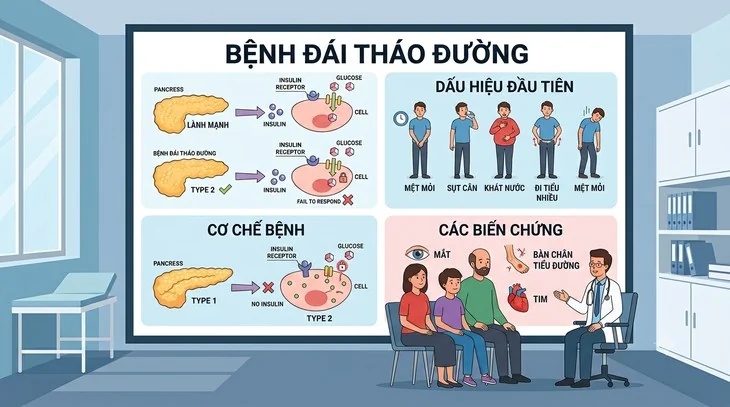
Because few people think a child can have diabetes, the early signs are easily missed. Some children are only brought to a medical facility when their blood sugar is already very high and they have developed diabetic ketoacidosis (DKA), a serious acute complication of diabetes.
Not caused by eating too much sugar
In type 1, the cause is usually autoimmune: the body's own immune system attacks the beta cells in the pancreas, which make the hormone that helps regulate blood sugar. Over time, the pancreas can no longer produce enough of this hormone. A child's sweet tooth does not directly cause this disease. Children with type 1 need daily treatment as prescribed by their doctor.
Type 2 diabetes, which used to be seen almost only in adults, now also occurs in children and teenagers, especially those who are overweight or obese or have metabolic risk factors. This type usually develops more quietly, so it is even easier to overlook.
Signs not to ignore
- Constant thirst, drinking a lot, urinating much more than usual.
- A child who was already toilet-trained suddenly starts wetting the bed again.
- Losing weight without dieting, often hungry, tired.
- Blurred vision.
With type 1, these signs can appear fairly quickly, within a few weeks to a few months. What makes parents miss them is that they are easily mistaken for something else: drinking a lot is put down to hot weather, frequent urination to a urinary tract infection, and tiredness to hard schoolwork.
Ketoacidosis: a complication that needs emergency care
When the body is severely short of the hormone that regulates blood sugar, cells cannot use enough glucose to make energy. The body switches to burning fat, producing ketones. When too many ketones build up, they cause ketoacidosis.
The child may then have stomach pain, nausea or vomiting, dehydration, drowsiness, deep and fast breathing, and breath that smells faintly fruity. This is an emergency that must be treated promptly at a facility equipped for intensive care and close monitoring. Notably, some children are only diagnosed with type 1 diabetes for the first time because of an episode of ketoacidosis.
The disease can be managed
Having diabetes does not mean your child has to give up school, play or physical activity. If it is found early and treated properly, children can still go to school, take part in daily life and grow up like other children their age.
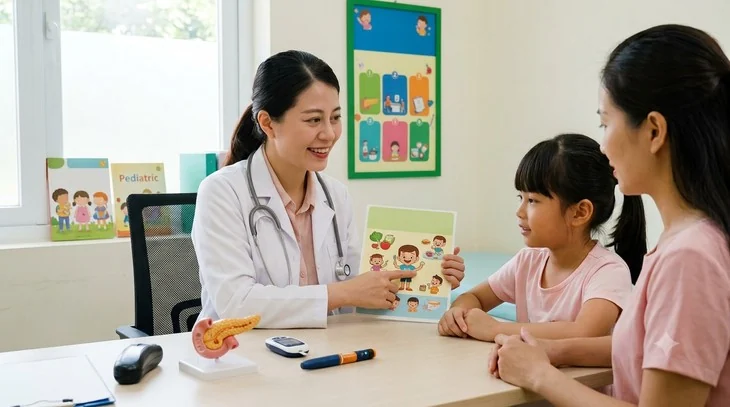
Treatment is a long journey that requires the child, parents, teachers and health workers to work together: controlling blood sugar, taking medicine as prescribed, eating and exercising sensibly, and knowing how to recognize when blood sugar is too high or too low.
Trusted clinic for diabetes in children in Ho Chi Minh City
With nearly 20 years of experience and a team of highly qualified doctors, Ky Hoa Medical Center is a familiar choice for many families in Ho Chi Minh City when they need care for diabetes in children. Here, our Pediatrics doctors take time to listen, examine carefully and explain clearly so that you fully understand your child's condition, then agree together on a care and follow-up plan.
Laboratory tests is performed on site, so you can complete check-ups in one place, which makes follow-up visits easier.
The center operates under Operating License No. 00449/HCM-GPHĐ, with a list of medical techniques approved by the Ho Chi Minh City Department of Health (Decision 471/QĐ-SYT), and is a primary care facility contracted with Ho Chi Minh City Social Security, accepting health insurance (BHYT) visits on Saturdays as well. The practising certificates of our 24 doctors are published on our Doctors page.
When your child is very thirsty, urinates a lot, starts wetting the bed again, loses weight for no clear reason or is tired for a long time, especially when these signs come together, you can bring them to the Pediatrics department at Ky Hoa Medical Center, where a doctor will examine them and order suitable laboratory tests; simply walk in during opening hours and take a queue number. If your child already shows the signs of ketoacidosis described above, take them for emergency care right away.
Ky Hoa Medical Center
Address: 266A - 268 3 Thang 2 Street, Hoa Hung Ward, Ho Chi Minh City
Opening hours: Monday to Saturday, 6:30 - 11:30 and 13:00 - 17:00 (closed on Sunday)
Hotline: 028.3868.1097
Source: Suc Khoe & Doi Song (Health & Life) newspaper