

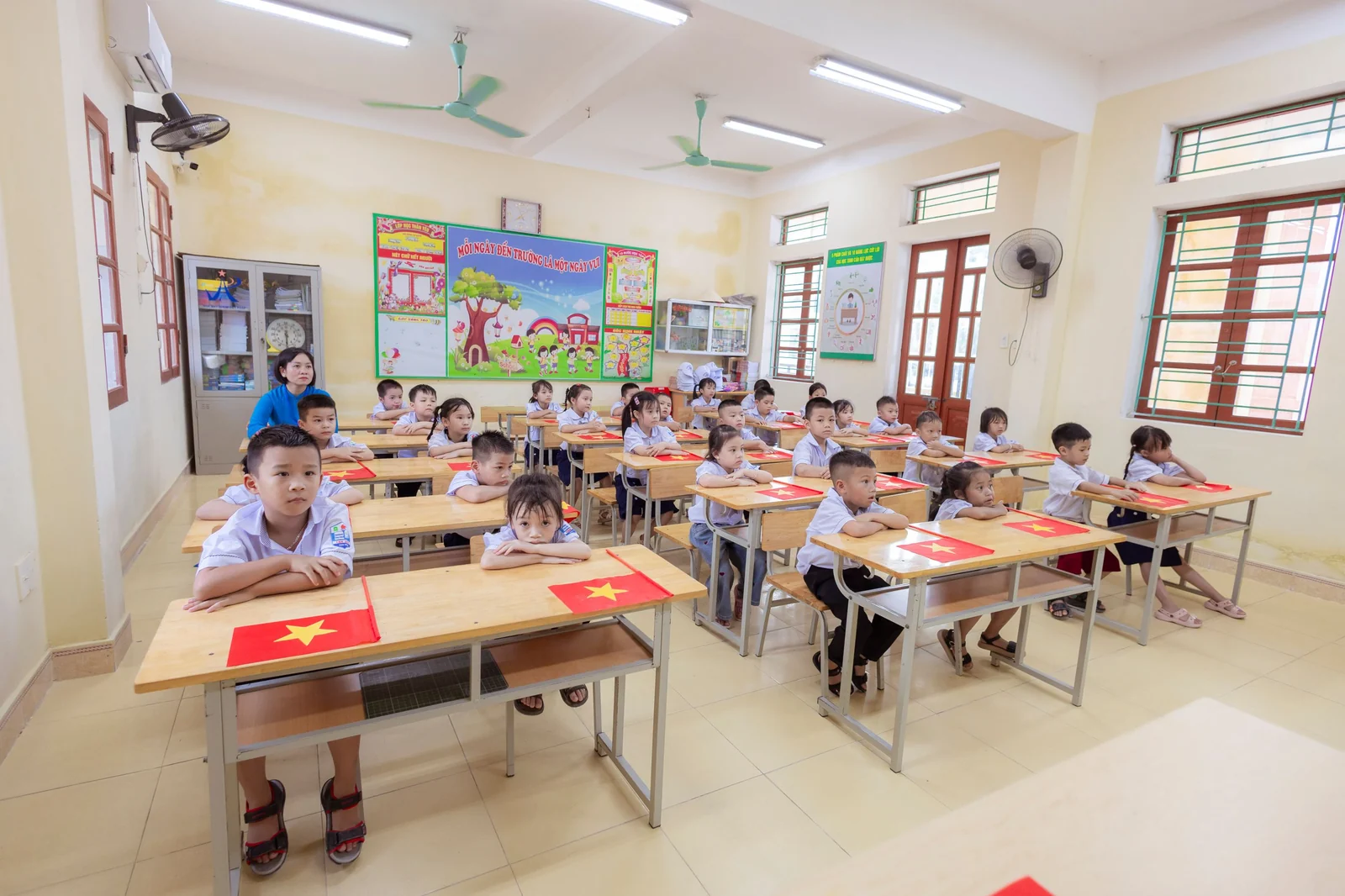
A fever in the first days of school often has no clear cause yet. For the first three days, watch drinking, urination and alertness, not just temperature.
A few days after going back to school, your child suddenly has a fever. Apart from looking tired, there is no cough, no runny nose and no rash yet. On the first day it is very hard to know for sure what is wrong, because flu, hand, foot and mouth disease, dengue fever, respiratory viruses and many other infections can all start with fever, tiredness and poor appetite.
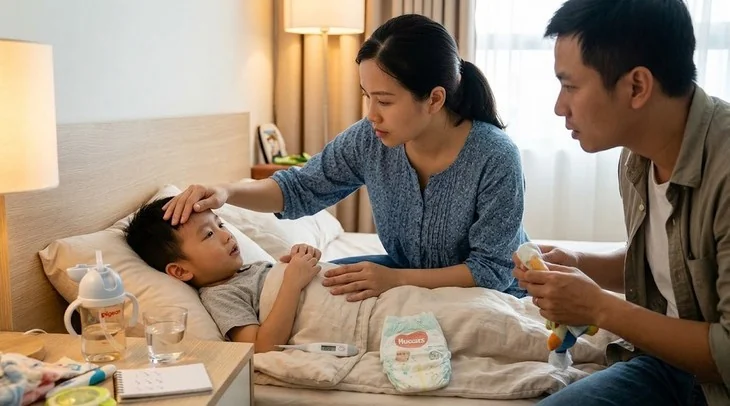
At this point parents do not need to guess the name of the illness, just observe their child systematically. A few notes on your phone will help the doctor far more than saying "my child has had a fever for a few days".
Day one: four things to note down
- The fever. When it started, the highest temperature, whether it is constant or comes and goes, and how long until it returns. You do not need to measure constantly; what matters is how your child is between fever spikes.
- Drinking. Does your child ask for drinks, vomit after drinking, have dry lips and mouth, or cry with few tears? If your child feels nauseous, give small sips often.
- Urination. Watch for your child passing much less urine, going many hours without urinating, or having dark urine along with being very thirsty. For a baby still in diapers, count the wet diapers.
- Alertness. This is the one most often overlooked. Does your child recognize you, answer when called, and sit up and play once the fever comes down, or just lie there, sleep heavily and be hard to wake?
A child who sits up, talks and is willing to drink once the fever comes down is usually less worrying than a child with only a mild fever who stays very drowsy.
Day two: watch for new symptoms
- Cough, runny nose, sore throat: these may be due to a respiratory virus, including flu. What matters most is whether your child breathes fast, wheezes, makes a harsh noise when breathing, has to work hard to breathe, or has to stop to catch their breath while talking, feeding or drinking.
- Drooling, refusing food: hand, foot and mouth disease often starts with fever, tiredness and a sore throat, and only later do sores appear in the mouth and a rash on the hands and feet. If your child wants to drink but cries as soon as they do, their mouth and throat may be sore. Do not keep prying your child's mouth open to look for spots.
- Vomiting, diarrhea: note how many times your child vomits and has loose stools, and whether there is blood in the stool. Vomiting once is very different from vomiting so often that they cannot keep fluids down.
- Rash: take photos of the rash in good light, and note when it appeared, where it is, and whether there are blisters or bleeding.
Day three: is your child getting better or worse?
Do not just ask "is there still a fever?". A child who still has a fever but is more alert, willing to drink, urinating regularly, breathing easily and starting to eat again is very different from a child whose fever has eased but who is exhausted, has stomach pain, keeps vomiting, is very thirsty, has cold hands and feet, or has bleeding gums or nosebleeds.
With dengue fever, the end of the fever does not necessarily mean the worrying stage is over; sometimes the stage that needs close monitoring begins just as the body temperature drops. So even if your child's fever goes away on the third or fourth day, do not assume they have recovered.

Signs that need a doctor right away, without waiting three days
- Fast breathing, labored breathing, the chest wall sinking in, bluish lips.
- Very drowsy, hard to wake, confused, having seizures.
- Unable to drink, sunken eyes, very dry mouth, passing much less urine.
- Stomach pain that keeps getting worse, a swollen belly, constant vomiting or vomiting blood.
- A nosebleed that will not stop, bleeding gums, black or bloody stools.
- Parents feel their child is "not like usual" and is getting weaker, even if they cannot name a specific sign.
When your child can go back to school
Having no fever this morning does not mean your child is ready for school. Your child needs to have enough energy for daily activities, be able to eat and drink, and not need special care in class. If your child still needs medicine to keep their temperature normal or is still very tired, let them stay home longer. If your child has an infectious disease, tell the teacher so the school can clean the classroom and keep an eye on the other children.
Trusted clinic for fever in children in Ho Chi Minh City
Ky Hoa Medical Center has nearly 20 years of experience in medical care in Ho Chi Minh City, with a team of highly qualified doctors and a careful, transparent way of working. For fever in children, our Pediatrics doctors take time to listen, examine carefully and explain clearly so that you fully understand your child's condition, then agree together on a care and follow-up plan.
Laboratory tests is performed on site, so you can complete check-ups in one place, which makes follow-up visits easier.
The center operates under Operating License No. 00449/HCM-GPHĐ, with a list of medical techniques approved by the Ho Chi Minh City Department of Health (Decision 471/QĐ-SYT), and is a primary care facility contracted with Ho Chi Minh City Social Security, accepting health insurance (BHYT) visits on Saturdays as well. The practising certificates of our 24 doctors are published on our Doctors page.
When your child has a fever, you can bring them to the Pediatrics department at Ky Hoa Medical Center, where a doctor will examine them, order suitable laboratory tests and advise on care; simply walk in during opening hours and take a queue number. If you see any of the warning signs above that need immediate care, take your child to the nearest medical facility.
Ky Hoa Medical Center
Address: 266A - 268 3 Thang 2 Street, Hoa Hung Ward, Ho Chi Minh City
Opening hours: Monday to Saturday, 6:30 - 11:30 and 13:00 - 17:00 (closed on Sunday)
Hotline: 028.3868.1097
Source: Suc Khoe & Doi Song (Health & Life) newspaper