
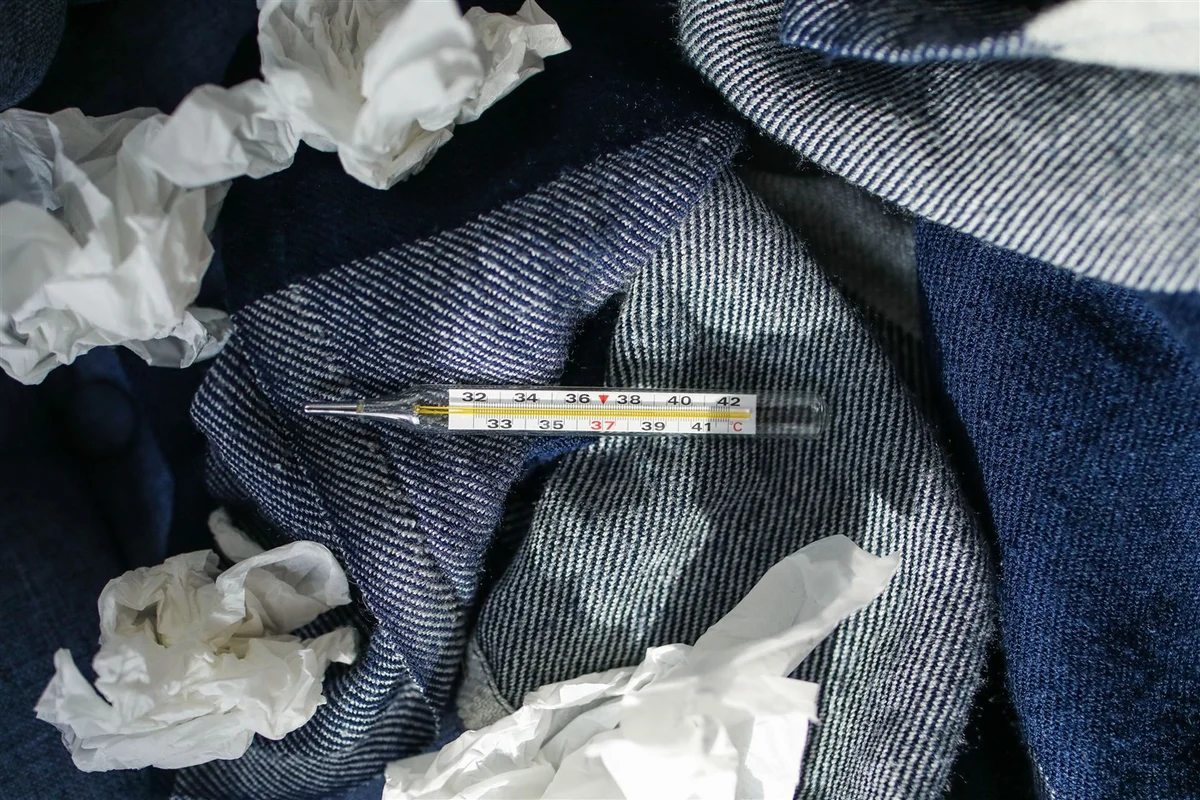
Fever is the body's response when fighting disease-causing agents, mostly caused by colds and flu and resolving on its own after a few days. This article helps you know how to care for a fever and recognize warning signs that require a medical visit.
What is a fever?
Normal body temperature is about 36.5 to 37.2 degrees C. An adult is considered to have a fever when the temperature measured under the arm is 37.5 degrees C or above, and a high fever at 39 degrees C. Use an electronic thermometer to measure, not just by touching the forehead.
Common causes
- Viral infection: common cold, flu, dengue fever.
- Bacterial infection: sore throat, pneumonia, urinary tract infection, skin infection.
- Food poisoning, enteritis.
- Less common: autoimmune diseases, drug reactions, malignant conditions.
Caring for a fever at home
- Drink plenty of fluids: plain water, fruit juice, thin rice porridge, electrolyte-replacement drinks.
- Rest, wear light, breathable clothing; do not wrap yourself tightly in blankets.
- Sponge the body with a warm cloth on the forehead, armpits, and groin.
- Eat soft, easily digestible foods.
- You may take a common fever-reducing medication at the correct dose as directed on the packaging or by the pharmacist; do not overdose, and do not take several products with the same ingredient at the same time.
- Monitor your temperature and record it to report to the doctor if needed.
You should not take antibiotics on your own without a prescription, because most fevers caused by viruses do not require antibiotics.
When should you see a doctor?
- Fever lasting more than 3 days, or a high fever of 39 degrees C that does not come down.
- Fever with a severe headache, stiff neck, or repeated vomiting.
- Fever with shortness of breath, chest pain, coughing up thick phlegm, or coughing up blood.
- Fever with painful urination or pain in the lower back and flanks.
- Fever with a rash, pinpoint bleeding under the skin, bleeding gums, or abdominal pain (think dengue fever).
- Older adults, pregnant women, people with chronic conditions or weakened immune systems who develop a fever.
- Fever after traveling or going into the forest.
Go to an emergency facility immediately if the fever is accompanied by confusion, seizures, severe shortness of breath, cold hands and feet, or very little urine. In other cases, you can come directly for a visit during opening hours at Ky Hoa Medical Center, 266A - 268 3 Thang 2 Street, Hoa Hung Ward, Ho Chi Minh City. Hotline 028.3868.1097, Zalo 082.299.3377.