

A breakfast low in purines, with enough fiber and the right protein, gives people with gout energy while helping keep blood uric acid stable.
Choosing foods that are low in purines and high in fiber, with sensible protein sources, and avoiding sugary drinks and alcohol can help control uric acid and limit the factors that tend to trigger an acute gout attack. Even so, please remember that diet is only one part of the picture and cannot replace medication your doctor has prescribed.
Balanced eating rather than extreme restriction
Having gout does not mean cutting out a long list of foods. What matters is keeping meat and purine-rich foods to moderate amounts and cutting back on sugary drinks and alcohol. A suitable breakfast usually follows a few principles:
- Eat enough to feel full and energized, but do not overeat.
- Get protein mainly from eggs, milk and low-fat dairy products.
- Add vegetables, fruit and whole grains that still have their bran.
- Cut back on packaged processed foods, very sweet dishes and foods high in saturated fat.
- Drink water regularly throughout the day.
Keeping a healthy weight also matters a great deal, because people who are overweight or obese are more likely to have high blood uric acid and to develop gout.
Breakfast food ideas
Milk is a food group that suits people with gout. Some studies have found that people who drink milk tend to have lower blood uric acid and a lower risk of gout. Milk also provides protein, calcium and vitamins. Choose skim or low-fat milk without added sugar, unsweetened yogurt, or low-fat Greek-style yogurt.
Oats, whole-wheat bread and other whole grains provide starch along with fiber, keeping you full longer and helping with weight control.
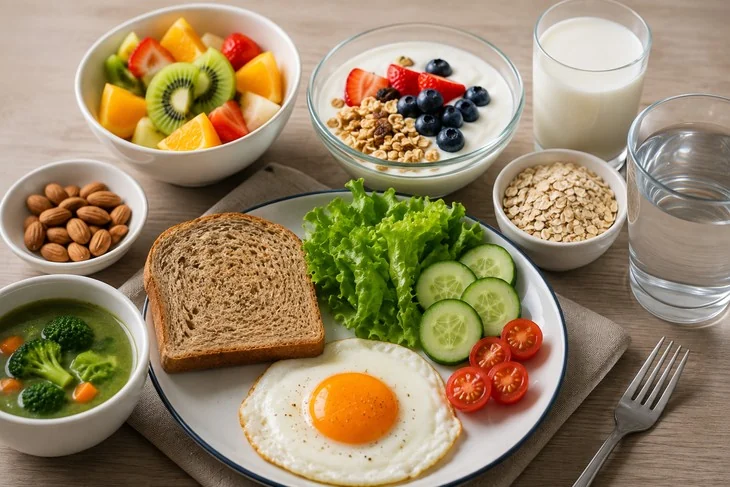
Eggs are rich in high-quality protein yet low in purines. A boiled egg, or an egg cooked with a modest amount of oil, served with whole-wheat bread and a few vegetables makes a fairly complete breakfast.
Green vegetables and fruit
Vegetables add fiber, vitamins and minerals. You can add cucumber, tomato, lettuce, leafy greens or broccoli to your breakfast. A few, such as asparagus, mushrooms, green peas and spinach, contain purines, but there is no evidence that plant-based purines raise the risk of gout as much as the purines in some animal foods. So there is no need to give these vegetables up entirely; just eat them in moderation and keep your menu varied.
Oranges, pomelos, apples, kiwis and strawberries can all have a place at the breakfast table. Eat the whole fruit rather than juicing it, and avoid eating a lot of very sweet fruit.
Do not forget to drink water
After a night's sleep, the body has lost some of its water. Drinking water as soon as you wake up and steadily throughout the day helps maintain urine output, supports the kidneys in clearing uric acid and may lower the risk of uric acid stones in the urinary tract.
Each person needs a different amount of water. Some people with gout are advised to drink about 2 - 3 liters a day, but this figure does not apply to everyone. People with heart failure, kidney disease or a condition that requires limiting fluids should follow their doctor's advice and not drink large extra amounts on their own.
Foods to limit at breakfast
- Intestines, liver, kidneys and other organ meats.
- Sausages, bacon and packaged cold cuts.
- Too much red meat, and high-purine seafood.
- Cream cakes, pastries and sugary breakfast cereals.
- Soft drinks, especially those made with high-fructose corn syrup.
- Beer, liquor and all other alcoholic drinks.
You also should not skip meals or follow an overly strict diet. People who are overweight should lose weight gradually, combining balanced eating with physical activity suited to their ability.
Trusted clinic for gout in Ho Chi Minh City
Ky Hoa Medical Center has nearly 20 years of experience in medical care in Ho Chi Minh City, with a team of highly qualified doctors and a careful, transparent way of working. For gout, our Internal Medicine doctors take time to listen, examine carefully and explain clearly so that you fully understand your condition, then agree together on a treatment and follow-up plan.
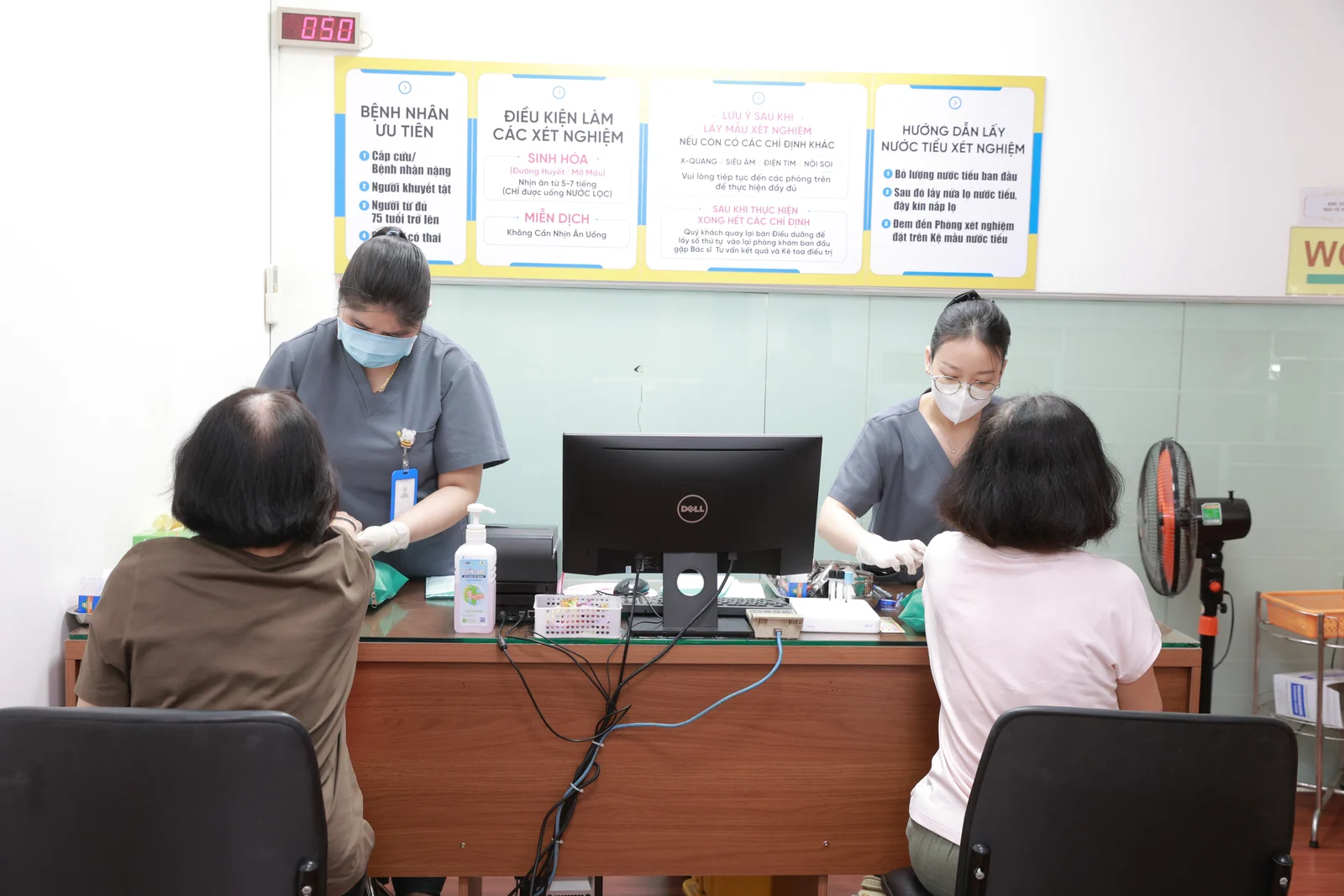
Laboratory tests is performed on site, so you can complete check-ups in one place, which makes follow-up visits easier.
The center operates under Operating License No. 00449/HCM-GPHĐ, with a list of medical techniques approved by the Ho Chi Minh City Department of Health (Decision 471/QĐ-SYT), and is a primary care facility contracted with Ho Chi Minh City Social Security, accepting health insurance (BHYT) visits on Saturdays as well. The practising certificates of our 24 doctors are published on our Doctors page.
If your joints keep swelling and hurting, or you are not sure what your uric acid level is, you can come to Ky Hoa Medical Center, where an Internal Medicine doctor will examine you, order suitable laboratory tests and give you personal dietary advice. Simply walk in during opening hours and take a queue number.
Ky Hoa Medical Center
Address: 266A - 268 3 Thang 2 Street, Hoa Hung Ward, Ho Chi Minh City
Opening hours: Monday to Saturday, 6:30 - 11:30 and 13:00 - 17:00 (closed on Sunday)
Hotline: 028.3868.1097
Source: Suc Khoe & Doi Song (Health & Life) newspaper