

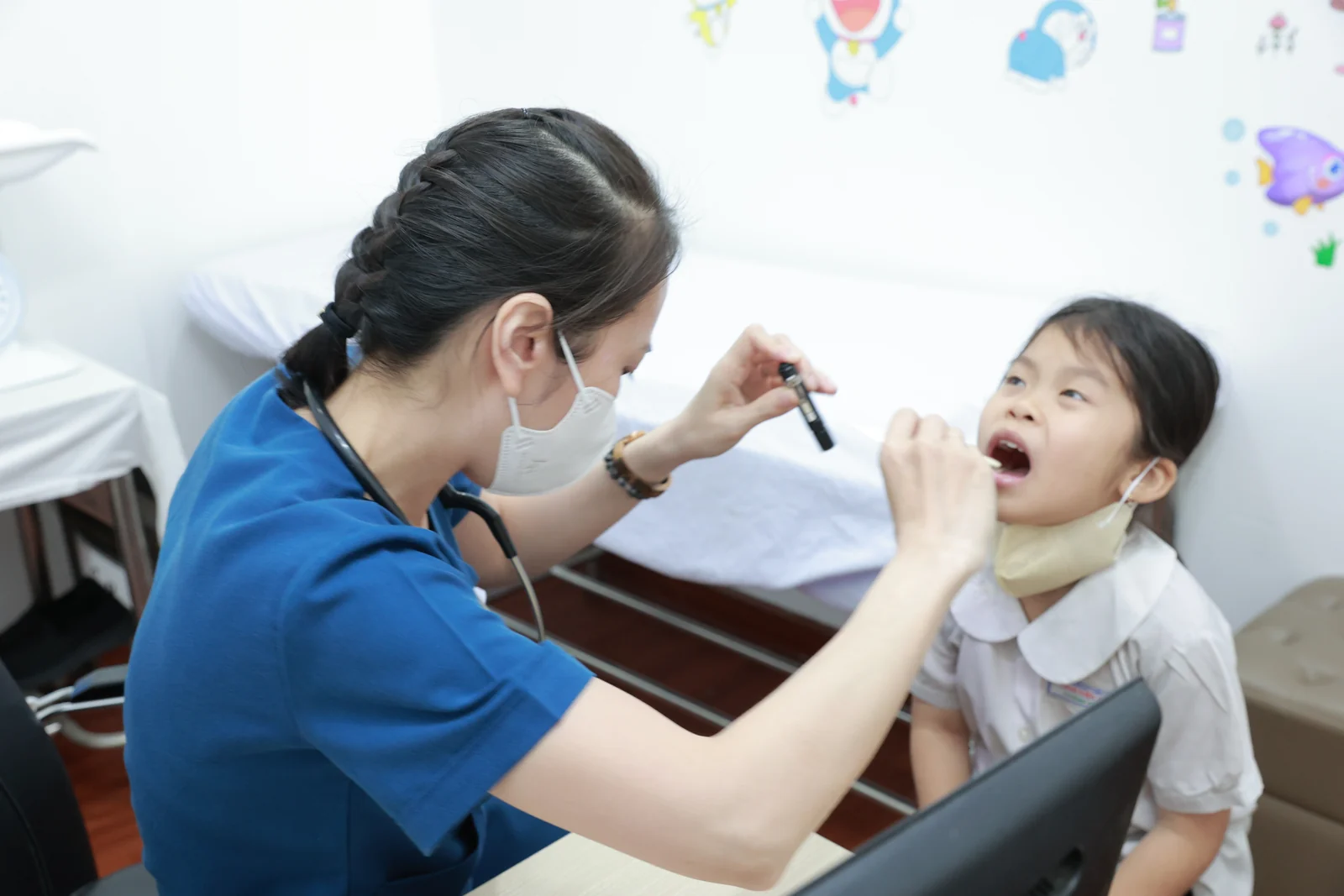
Most children with hand, foot and mouth disease have mild cases, but some become seriously ill. Spot warning signs early so your child gets checked in time.
How the disease spreads
This is an acute infectious disease caused by a group of intestinal viruses called enteroviruses. The virus spreads when a child comes into direct contact with the saliva, nose and throat secretions, blister fluid or stool of a sick person, or indirectly through objects and surfaces carrying the virus.
In Vietnam, cases usually rise in two waves each year: March-May and September-December. Ministry of Health data show that in the first 8 months of 2026 alone, there were nearly 100,000 cases nationwide, and young children are the group that needs the most attention.
The disease spreads quickly in nurseries, preschools and schools, where children play close together and hand, object and environmental hygiene is not always good.
Signs to recognize
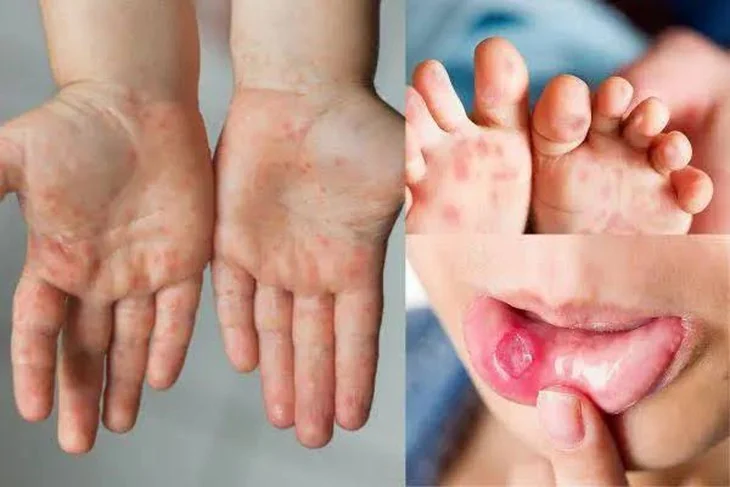
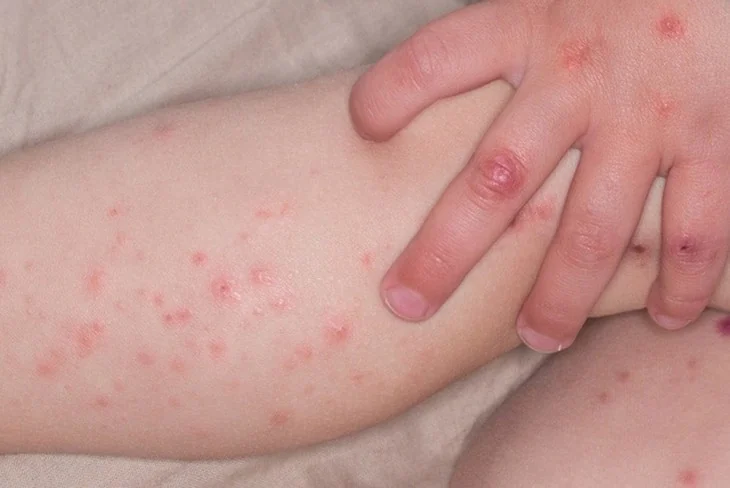
- Rash and blisters: in the first day or two, small pink spots a few mm across appear on the skin, then turn into oval blisters about 2-5 mm in size, which may have a darker gray center. They are most often found on the palms, fingers, soles of the feet and buttocks. These spots are usually not painful or itchy and last about 7-10 days.
- Mouth ulcers: sores about 4-8 mm wide on the tongue, roof of the mouth and inside of the cheeks, making the child sore, reluctant to eat and have trouble swallowing. Because they look like ordinary mouth ulcers, many parents do not think of hand, foot and mouth disease.
- Fever: some children have a mild fever, others a high fever. A persistent high fever that is hard to bring down is a warning sign that the disease may be getting worse.
Once you know your child has the disease, take them to a doctor for an assessment, guidance on home care and how to recognize signs that it is getting worse.
Six signs that mean your child needs to see a doctor right away
There is no specific medicine for this disease yet, so close monitoring at home is very important. Take your child to a medical facility right away if you notice:
- Your child is frequently startled or jerks suddenly.
- A high fever that lasts and is hard to bring down.
- Lethargy, tiredness, not wanting to play, sleeping a lot or drowsiness.
- Fast or abnormal breathing: shallow breathing, pauses in breathing, wheezing or the chest pulling in with each breath.
- Heavy sweating, or feeling cold all over or in the hands and feet.
- Trembling hands, legs or body, being unable to sit steadily, or walking unsteadily.
Preventing the disease at home and at school
Good personal and environmental hygiene is the main way to prevent the disease:
- Bathe and clean your child every day; adults should wash their hands thoroughly before and after caring for the child.
- For a child who has the disease, wash their clothes, diapers and face towels thoroughly, then soak them in boiling water or a disinfectant solution; wash them separately, not together with other children's things.
- Families, nurseries and kindergartens should regularly wipe down surfaces and objects that children often touch. Teach children to wash their hands properly with soap before meals and after using the toilet.
- Do not pre-chew food for children or feed them with your bare hands. Help your child build the habit of not sucking their fingers, not eating with their hands and not putting toys in their mouth.
- Do not let children share towels, cups, bowls, spoons or toys that have not been washed and disinfected.
- Households with a sick member should scrub the toilet regularly with soap and disinfectant.
Trusted clinic for hand, foot and mouth disease in children in Ho Chi Minh City
For nearly 20 years, Ky Hoa Medical Center has cared for the health of people in Ho Chi Minh City, bringing together highly qualified doctors who are attentive at every visit. When hand, foot and mouth disease in children needs checking, our Pediatrics doctors take time to listen, examine carefully and explain clearly so that you fully understand your child's condition, then agree together on a care and follow-up plan.
The center operates under Operating License No. 00449/HCM-GPHĐ, with a list of medical techniques approved by the Ho Chi Minh City Department of Health (Decision 471/QĐ-SYT), and is a primary care facility contracted with Ho Chi Minh City Social Security, accepting health insurance (BHYT) visits on Saturdays as well. The practising certificates of our 24 doctors are published on our Doctors page.
When your child has a fever, blisters on the hands and feet or mouth sores, simply walk in during opening hours and take a queue number at Ky Hoa Medical Center, where a Pediatrics doctor will examine your child. If your child has any of the six warning signs of worsening illness described above, take them to the nearest medical facility right away.
Ky Hoa Medical Center
Address: 266A - 268 3 Thang 2 Street, Hoa Hung Ward, Ho Chi Minh City
Opening hours: Monday to Saturday, 6:30 - 11:30 and 13:00 - 17:00 (closed on Sunday)
Hotline: 028.3868.1097
Source: Suc Khoe & Doi Song (Health & Life) newspaper