

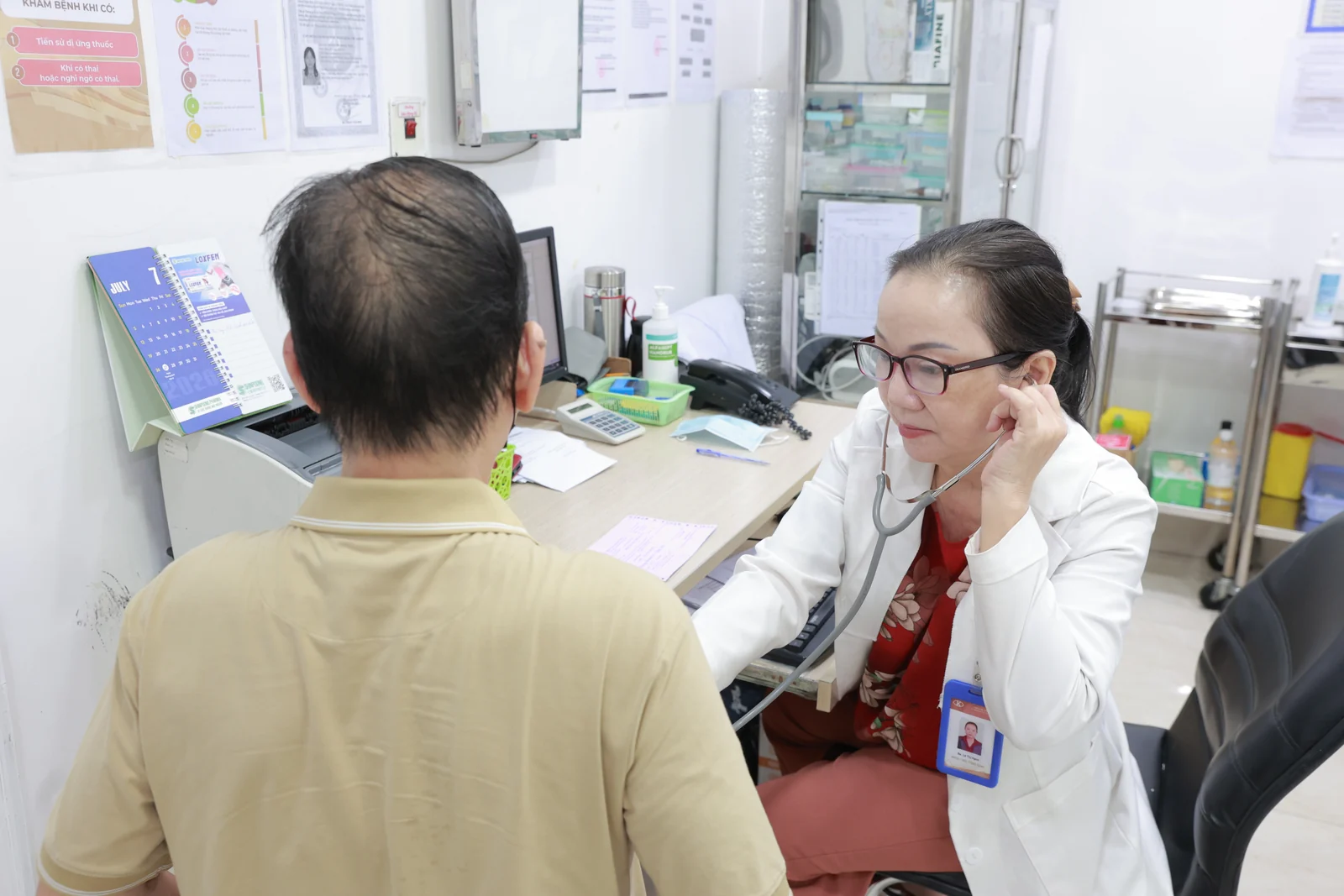
Age-related hearing loss creeps in quietly and affects both ears. Spotting it early and seeing a doctor helps older adults keep up conversations and enjoy life.
Presbycusis, or age-related hearing loss, is when the ability to hear gradually declines as the body grows older. Many people think hearing loss is a natural part of aging and do not see a doctor. In fact, finding it early helps identify the cause and the right hearing support, so you can keep communicating well and living happily and healthily.
Why hearing declines with age
Age-related hearing loss is very common in older adults. Figures recorded in the United States show that about 1 in 3 people aged 65 to 74 have hearing loss, and the rate is even higher among older people.
The condition usually affects both ears and gets worse over time. People can still hear sounds but have trouble making out words and understanding what others are saying, especially in noisy places. Left without support for a long time, older adults may become reluctant to talk with their children, grandchildren and friends, take part less in social activities and gradually withdraw.
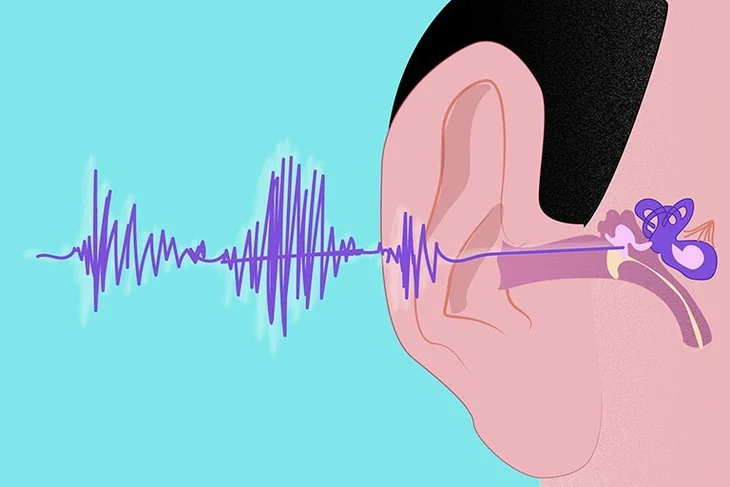
Age-related hearing loss is tied to natural changes in the hearing organs over the years. Some factors that contribute to declining hearing:
- Degeneration of the auditory nerve pathway: the structures inside the ear and the pathways that carry sound to the brain age, so the ear picks up and processes sound less well.
- Noise: living or working for many years in loud places can damage the hair cells that sense sound in the inner ear, causing hearing loss and sometimes ringing in the ears (tinnitus).
- Certain medications: some can harm the ears if taken in high doses or for a long time. That is why older adults being treated for chronic conditions and taking several medicines need to take them exactly as prescribed by their doctor.
In addition, many other conditions can also cause hearing loss, so do not assume that hearing trouble in later life is simply due to age.
Signs it is time to see a doctor
Because hearing loss happens quietly, people often do not notice it themselves. Children and grandchildren can help by watching for the following signs in their parents and grandparents:
- Finding it hard to hear or understand on the phone.
- Having trouble following a conversation when two or more people are talking.
- Often asking others to repeat themselves.
- Turning up the TV or speakers much louder than others find comfortable.
- Barely being able to make out words in restaurants, at parties or in meetings.
- Feeling that other people are "mumbling" and not speaking clearly.
- Often having ringing in the ears, or feeling that hearing is gradually getting worse.
When you notice these signs, take your loved one for an ENT (Ear, Nose & Throat) checkup. In particular, if hearing loss happens suddenly, see a doctor early, because this is not the usual kind of age-related hearing loss and may be due to a cause that needs prompt treatment.
How to take care of your ears
There is currently no way to completely prevent hearing from declining with age, but a few good habits help protect your hearing:
- Avoid loud noise. Anyone working in a noisy place should wear hearing protection and limit exposure time.
- Live healthily, keep chronic conditions well controlled, take medicine as your doctor advises, and do not buy medicines on your own that may affect the ears.
- Do not use cotton swabs or hard objects to dig deep into the ear for earwax, as this can easily scratch the ear canal, damage the eardrum or push the wax in deeper.
- Have your ears checked regularly, especially when you notice your hearing getting worse.
Trusted clinic for hearing loss in older adults in Ho Chi Minh City
With nearly 20 years of experience and a team of highly qualified doctors, Ky Hoa Medical Center is a familiar choice for many families in Ho Chi Minh City when they need care for hearing loss in older adults. Here, our ENT doctors take time to listen, examine carefully and explain clearly so that you fully understand your condition, then agree together on a treatment and follow-up plan.
The center operates under Operating License No. 00449/HCM-GPHĐ, with a list of medical techniques approved by the Ho Chi Minh City Department of Health (Decision 471/QĐ-SYT), and is a primary care facility contracted with Ho Chi Minh City Social Security, accepting health insurance (BHYT) visits on Saturdays as well. The practising certificates of our 24 doctors are published on our Doctors page.
Hearing loss is not something you simply have to put up with in old age. When you notice your grandparents or parents gradually losing their hearing, or suddenly unable to hear clearly, you can bring them to the ENT (Ear, Nose & Throat) department at Ky Hoa Medical Center, where a doctor will examine them, look for the cause and advise on hearing support. Simply walk in during opening hours and take a queue number.
Ky Hoa Medical Center
Address: 266A - 268 3 Thang 2 Street, Hoa Hung Ward, Ho Chi Minh City
Opening hours: Monday to Saturday, 6:30 - 11:30 and 13:00 - 17:00 (closed on Sunday)
Hotline: 028.3868.1097
Source: Suc Khoe & Doi Song (Health & Life) newspaper