
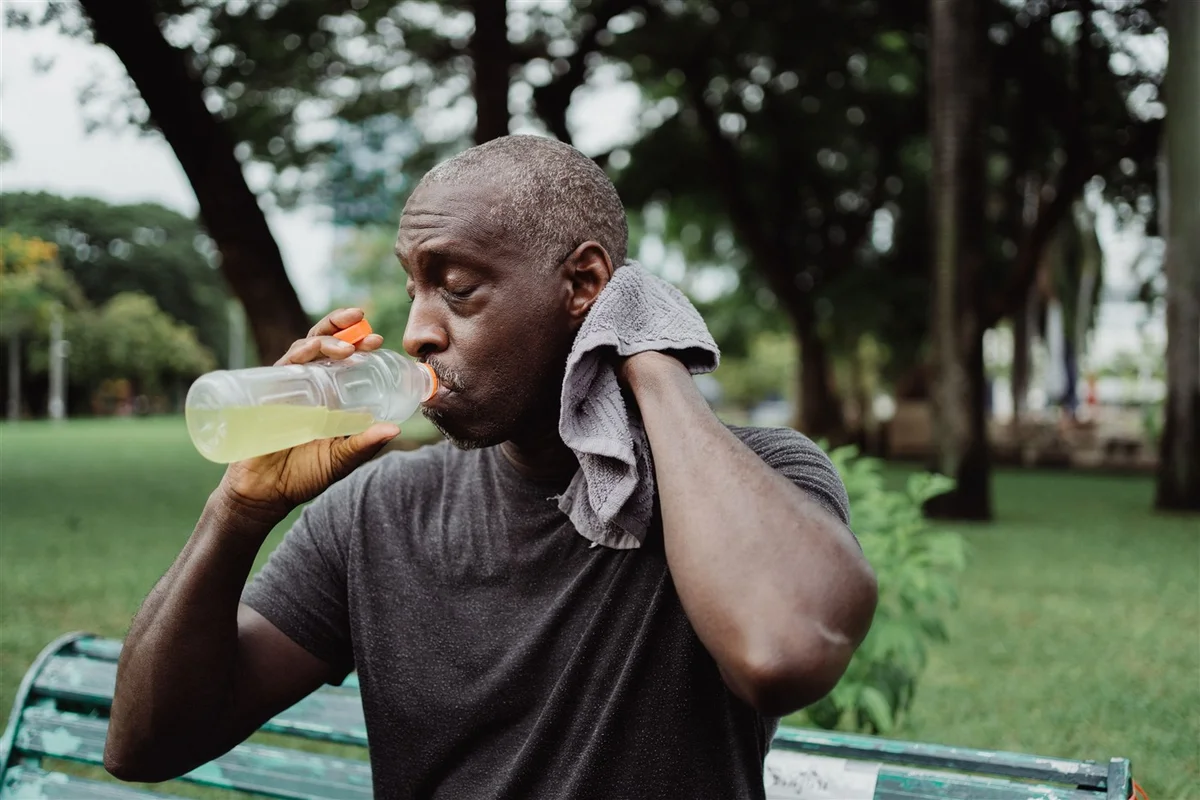
Working or exercising under the hot sun can lead to heat exhaustion and, more seriously, life-threatening heat stroke. This article helps you recognize the signs early, give first aid correctly, and protect your whole family.
How are heat exhaustion and heat stroke different?
When it is hot, the body sheds heat by sweating. If you stay in the sun too long and lose a lot of water without replacing it, this mechanism becomes overloaded.
- Heat exhaustion (heat fatigue): extreme tiredness, heavy sweating, cool damp skin, thirst, dizziness, headache, nausea, muscle cramps. The patient remains conscious.
- Heat stroke: body temperature rises very high, possibly above 40 degrees C; skin hot and red, sometimes dry with no sweat; confusion, slurred speech, seizures, fainting. This is a medical emergency.
Who is at risk?
- People who work outdoors: construction workers, delivery riders, farmers.
- People doing high-intensity sports in the sun.
- Older adults, young children, people with cardiovascular disease, diabetes, or obesity.
- People who drink alcohol, drink too little water, or take certain diuretic medications.
- Children left forgotten in a closed car: extremely dangerous.
Correct first aid
- Move the patient to a shady, well-ventilated place and loosen their clothing.
- Cool the body: wipe with a wet towel, apply cool compresses to the armpits, groin, and neck; fan them.
- If the patient is conscious, give small sips of cool water or an electrolyte-replacing drink.
- Do not give water to a person who is confused or having seizures, as they may choke.
- If there are signs of heat stroke (confusion, seizures, fainting, very high fever): call emergency services at 115 immediately, keep cooling the person while waiting for the ambulance.
Do not rub warming oils, perform coin rubbing (gua sha), or wrap the person in a thick blanket if they have heat exhaustion, as this makes it harder to lower body temperature.
Preventing heat exhaustion
- Drink water regularly throughout the day; do not wait until you feel thirsty.
- Wear a wide-brimmed hat and light-colored, loose, breathable clothing.
- Limit going outdoors between 10:00 and 16:00 when the sun is strongest.
- If working outdoors, take short breaks in the shade every hour.
- Do not drink alcohol in hot weather.
- Never leave children or older adults alone in a car or a closed, stuffy room.
After heat exhaustion, if you still feel tired, have a headache, or urinate less, you should go in for a check-up. You can walk in during opening hours at Ky Hoa Medical Center, 266A - 268 3 Thang 2 Street, Hoa Hung Ward, Ho Chi Minh City. Hotline 028.3868.1097, Zalo 082.299.3377.