


An IUD works for years but is not meant to stay in forever. Each type has its own lifespan, so women should know when to have it checked, removed or replaced.
An intrauterine device (IUD) is an effective, long-lasting method of contraception, and fertility can return after it is removed. Yet many women almost forget about it once it is in: they do not remember what year it was inserted or what type it is, and some even think it can stay in the uterus for life if it causes no discomfort. This idea needs to change, because every IUD has an expiry period, needs regular checkups and should be removed or replaced when the time comes.
Each type of IUD has its own lifespan
There are currently two main groups of IUDs: copper IUDs and hormonal IUDs (which release a hormone). The World Health Organization states that copper IUDs work for about 10 - 12 years and hormonal IUDs for about 3 - 8 years, with the exact figure depending on the product. So there is no single answer for everyone to the question "how many years can an IUD stay in?".
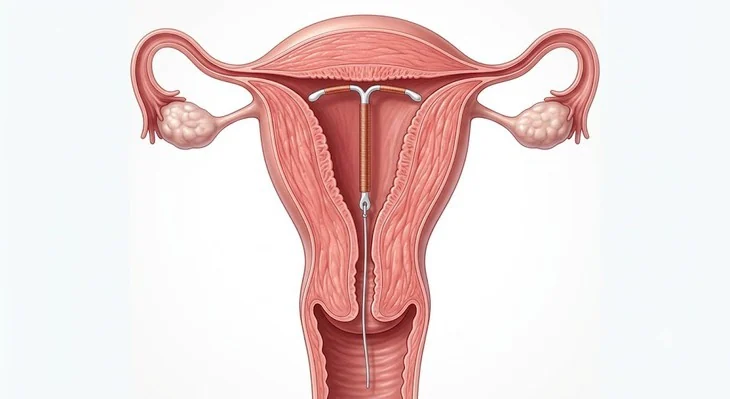
What matters is that each woman knows clearly what type of IUD she has, when it was inserted and how long the manufacturer allows it to be used. When it is due, go to a medical facility to have it checked and removed; if you still want contraception, you can have a new IUD inserted or choose another method.
Does it stop working as soon as it expires?
Not exactly. An IUD does not suddenly "switch off" on a particular day. But once it is past the product's recommended period, it should not simply be left in place, because its effectiveness and safety are no longer assured in the way they were within the evaluated period. Also, do not apply an acquaintance's experience to yourself, as one type of IUD may last longer than another.
When early removal is needed
Not having reached the expiry date does not mean you must keep the IUD. It can be removed when you want to have a baby, want to switch to another method of contraception, or when the doctor finds a problem that requires removal. See a doctor early if you have any of the following signs:
- Lower abdominal pain that lasts or keeps getting worse.
- Unusual bleeding or vaginal discharge.
- Fever.
- Suspected pregnancy.
- You can no longer feel the IUD strings as before.
In some cases the IUD slips down, shifts or sits in the wrong place and needs to be assessed by a doctor.
Monitoring is still needed after insertion
IUDs are very effective: in the first year of use, the pregnancy rate is under 1% for both copper and hormonal IUDs. However, an IUD does not protect against sexually transmitted infections, so people at risk still need to use condoms as well.
After insertion, women should be shown how to monitor themselves and should see a doctor if anything seems wrong. Never pull the strings yourself, remove the IUD yourself or ask someone without medical training to do it.
Things to remember
- As soon as it is inserted, note down in a notebook or on your phone: the type of IUD, the date it was inserted, when it needs to be checked and when it must be removed or replaced.
- If you do not remember the type of IUD or the date it was inserted, do not guess; see an obstetrics and gynecology doctor to have it checked, especially if you have had it for many years.
- Long-term use is different from permanent. A contraceptive method is only truly safe when it is the right choice for you, inserted with the correct technique and monitored regularly.
Trusted clinic for gynecology and contraception advice in Ho Chi Minh City
With nearly 20 years of experience and a team of highly qualified doctors, Ky Hoa Medical Center is a familiar choice for many families in Ho Chi Minh City when they need care for gynecology and contraception advice. Here, our Obstetrics & Gynecology doctors take time to listen, examine carefully and explain clearly so that you fully understand your condition, then agree together on a treatment and follow-up plan.
The center operates under Operating License No. 00449/HCM-GPHĐ, with a list of medical techniques approved by the Ho Chi Minh City Department of Health (Decision 471/QĐ-SYT), and is a primary care facility contracted with Ho Chi Minh City Social Security, accepting health insurance (BHYT) visits on Saturdays as well. The practising certificates of our 24 doctors are published on our Doctors page.
If you have had an IUD for a long time and do not remember when it expires, or you have abdominal pain or unusual bleeding, you can come to the Obstetrics & Gynecology department at Ky Hoa Medical Center, where a doctor will examine you, do an ultrasound when needed and advise on a suitable next step. Simply walk in during opening hours and take a queue number.
Ky Hoa Medical Center
Address: 266A - 268 3 Thang 2 Street, Hoa Hung Ward, Ho Chi Minh City
Opening hours: Monday to Saturday, 6:30 - 11:30 and 13:00 - 17:00 (closed on Sunday)
Hotline: 028.3868.1097
Source: Suc Khoe & Doi Song (Health & Life) newspaper