

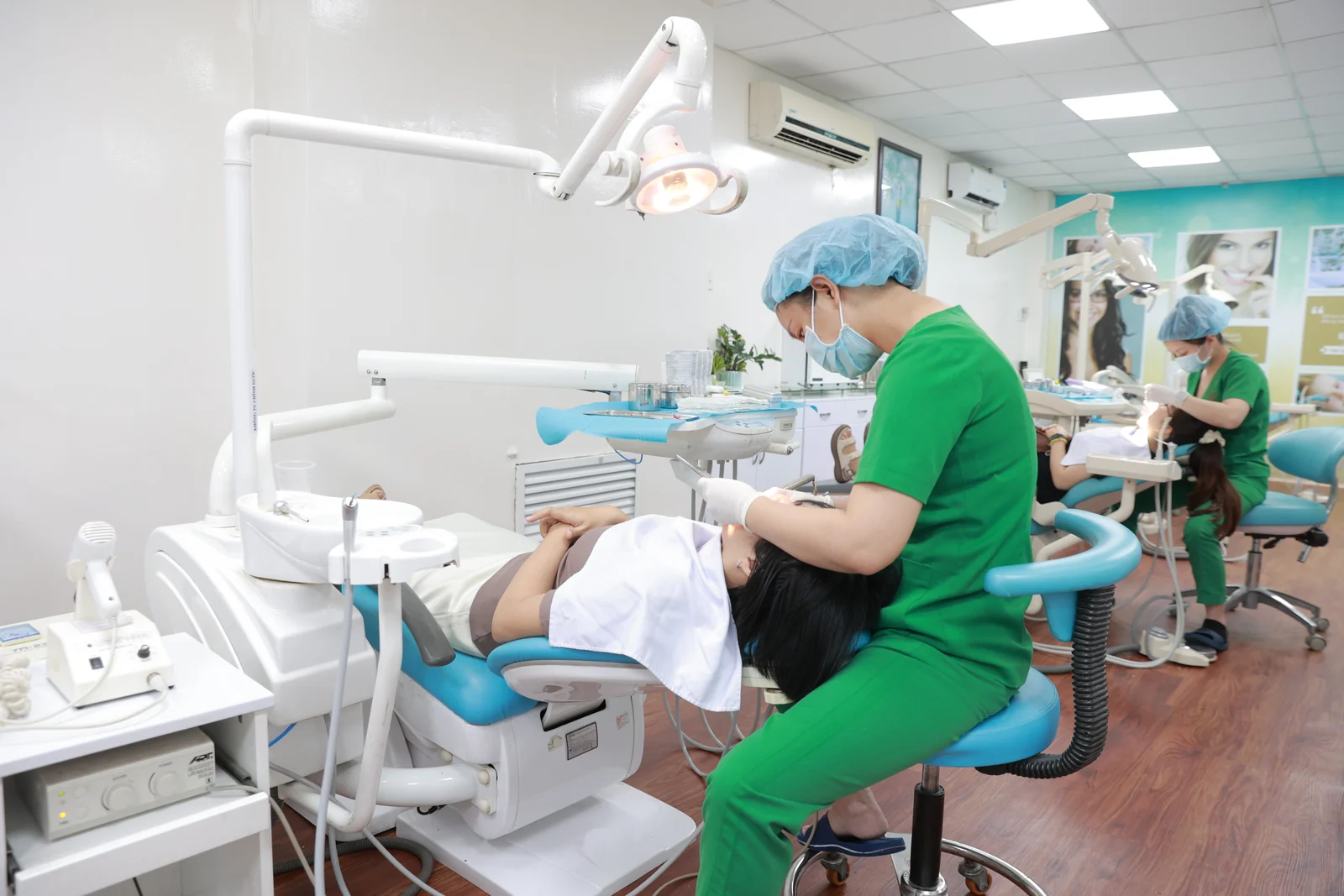
A crooked wisdom tooth can inflame the gums and harm the tooth next to it even before it hurts. Knowing the risks helps you decide when to remove or monitor it.
Why wisdom teeth often grow in crooked
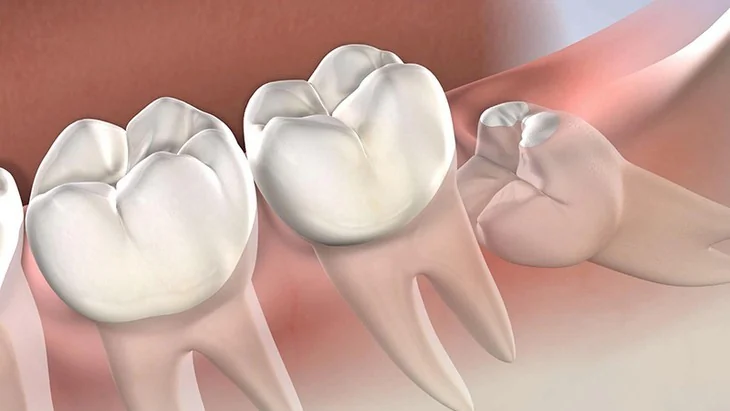
Wisdom teeth, also known as third molars, are the last teeth to come in at each corner of the jaw, usually between the ages of 17 and 25. By then the jaw often has no room left, so the tooth easily tilts, stays buried in the bone or only partly breaks through the gum.
Some people live with a crooked wisdom tooth for years without any pain, but no pain does not necessarily mean no harm. A misaligned tooth is very hard to brush clean, and food and plaque that build up over time can lead to tooth decay, gum inflammation and periodontal disease.
Possible complications
- Gum infection around the wisdom tooth: when the tooth has only partly come through, the flap of gum over it forms a small pocket that traps food and bacteria, causing swelling, pain and bad breath.
- Damage to the second molar: a wisdom tooth leaning against its neighbor traps food in between, so the second molar is prone to decay and damage to the surrounding gum tissue. In some cases, an impacted tooth can even wear away the root of the tooth next to it.
- Cysts or damage around the tooth: these are sometimes seen with impacted teeth, although not everyone develops them.
- Risk of touching the nerve during treatment: when a lower wisdom tooth sits close to the nerve canal, the extraction needs careful planning based on an X-ray.
When to extract and when to monitor
Not every crooked wisdom tooth has to come out. The dentist will examine your mouth and usually order an X-ray to see which way the tooth is growing, how deeply it is buried, and how close it lies to the neighboring tooth, the jawbone and the nerve.
If the tooth is not causing disease, does not affect the tooth next to it, can still be cleaned and carries little risk of complications, regular check-ups may be all you need. Extraction is considered only when the tooth has already caused complications or carries a high risk.
Lower wisdom teeth are usually more complex, but the real difficulty also depends on the shape of the roots, bone density, the direction of growth and how deeply the tooth is buried, not only on which jaw it is in.
Preparing for an extraction
- Tell the dentist clearly about any medical conditions and allergies you have and all the medicines you are taking, especially those that affect blood clotting.
- People being treated for high blood pressure, diabetes, heart disease or a bleeding disorder need to be checked by a doctor and have their condition stable before the procedure. Do not stop your regular medicines on your own just to have a tooth pulled.
- If the area around the wisdom tooth is acutely inflamed, the dentist will assess the inflammation to choose the right timing and approach; the extraction does not always have to be postponed.
- Pregnant women can still have a tooth extracted when it is truly necessary and the benefits outweigh the risks; non-urgent cases are usually put off until later. Having your period does not mean the extraction must be delayed.
Caring for your mouth after an extraction
- Bite firmly on the gauze as instructed for the first few hours to stop the bleeding. Avoid rinsing hard, spitting repeatedly or drinking through a straw, as these can dislodge the blood clot in the socket.
- During the first 24 hours, you can hold a cold pack against the outside of your cheek in short sessions to reduce swelling; wrap it in a cloth and do not put ice directly on the skin.
- For the first few days, eat soft foods such as rice porridge, soup, eggs and milk, and avoid food that is very hot, hard, chewy or spicy. There is no need to drink large amounts of juice or vitamin C to heal faster; what matters is eating a balanced diet and drinking enough water.
- Keep your mouth clean as your dentist advises, and avoid brushing directly on the extraction site for the time being.
If the bleeding will not stop, the swelling and pain get worse after a few days, or you develop a fever, great difficulty opening your mouth, trouble swallowing or difficulty breathing, go back to the dentist right away.
Trusted clinic for impacted wisdom teeth in Ho Chi Minh City
With nearly 20 years of experience and a team of highly qualified doctors, Ky Hoa Medical Center is a familiar choice for many families in Ho Chi Minh City when they need care for impacted wisdom teeth. Here, our Dentistry doctors take time to listen, examine carefully and explain clearly so that you fully understand your condition, then agree together on a treatment and follow-up plan.
Digital X-ray is performed on site, so you can complete check-ups in one place, which makes follow-up visits easier.
The center operates under Operating License No. 00449/HCM-GPHĐ, with a list of medical techniques approved by the Ho Chi Minh City Department of Health (Decision 471/QĐ-SYT), and is a primary care facility contracted with Ho Chi Minh City Social Security, accepting health insurance (BHYT) visits on Saturdays as well. The practising certificates of our 24 doctors are published on our Doctors page.
Even if it does not hurt yet, a misaligned wisdom tooth should be checked, especially when it has just partly come through or is hard to clean. Simply walk in during opening hours and take a queue number at Ky Hoa Medical Center, where a doctor in Dentistry (Oral & Maxillofacial) will examine you, order an X-ray when needed and advise whether to extract the tooth or keep monitoring it.
Ky Hoa Medical Center
Address: 266A - 268 3 Thang 2 Street, Hoa Hung Ward, Ho Chi Minh City
Opening hours: Monday to Saturday, 6:30 - 11:30 and 13:00 - 17:00 (closed on Sunday)
Hotline: 028.3868.1097
Source: Suc Khoe & Doi Song (Health & Life) newspaper