
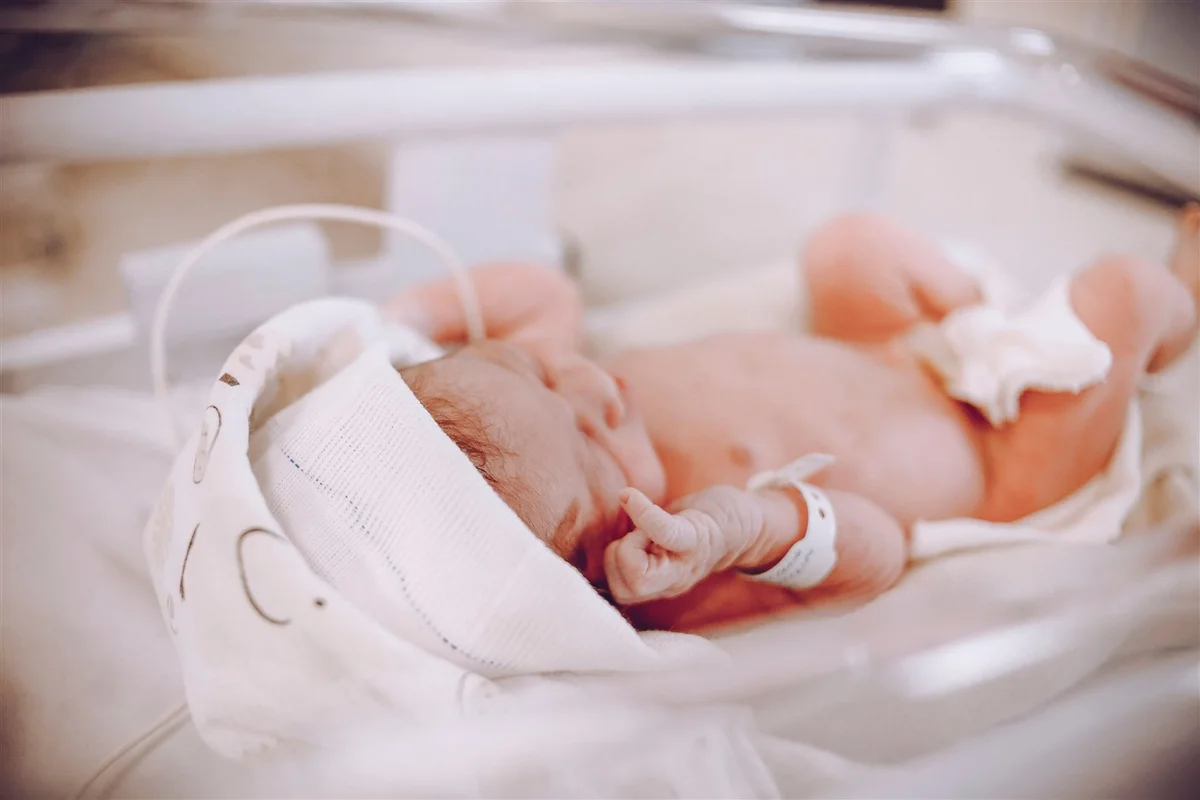
Jaundice is very common in newborns during the first week after birth; most cases are physiological jaundice and resolve on their own. However, some severe cases of jaundice can affect the baby's brain if not detected in time.
Why do newborns often get jaundice?
After birth, a baby's red blood cells are destroyed in large amounts, producing a yellow pigment called bilirubin. A newborn's liver is still immature and cannot clear it fast enough, causing the baby's skin and eyes to turn yellow. Premature babies and babies who are not feeding adequately are more prone to jaundice.
Physiological jaundice
- Appears after 24 hours of age, usually from day 2 to day 3.
- Mild yellowing on the face and chest; the baby still feeds well, sleeps well, and has normal urination and bowel movements.
- Gradually decreases and resolves within about 1 to 2 weeks (it may take longer in premature babies).
Signs that require taking the baby to a doctor right away
- Jaundice appears within the first 24 hours after birth.
- Jaundice spreads quickly down to the abdomen, thighs, lower legs, palms, and soles of the feet.
- The baby feeds poorly, is lethargic, and difficult to wake, or cries piercingly and arches the body.
- Jaundice lasting longer than 2 weeks in a full-term baby.
- Pale-colored stool (light yellow, white like bird droppings) and dark yellow urine.
- The baby has a fever or low body temperature.
The doctor will examine the baby, measure the bilirubin level, and decide whether phototherapy or further treatment is needed. Prolonged pale-colored stool may be a sign of a biliary tract disease that needs to be detected early.
How should parents monitor the baby at home?
- Observe the baby's skin under natural light; press a finger gently on the skin of the forehead, chest, or abdomen, then release it to see whether the skin turns yellow.
- Breastfeed the baby frequently, about 8 to 12 times a day, which helps the baby pass more stool and clear bilirubin more effectively.
- Monitor the number of times the baby urinates and has bowel movements, and the color of the stool, every day.
- Do not sunbathe the baby in harsh sunlight, apply leaves to the skin, or give the baby leaf water on your own; sunbathing does not replace medical examination.
- Attend the postnatal check-up at the time instructed by the doctor.
If the baby shows signs of abnormal jaundice, parents can bring the baby in for a direct examination during opening hours at Ky Hoa Medical Center, 266A - 268 3 Thang 2 Street, Hoa Hung Ward, Ho Chi Minh City, or call hotline 028.3868.1097, Zalo 082.299.3377 to ask about less crowded time slots in advance. If the baby is lethargic or refuses to feed, go immediately to the nearest emergency facility.