
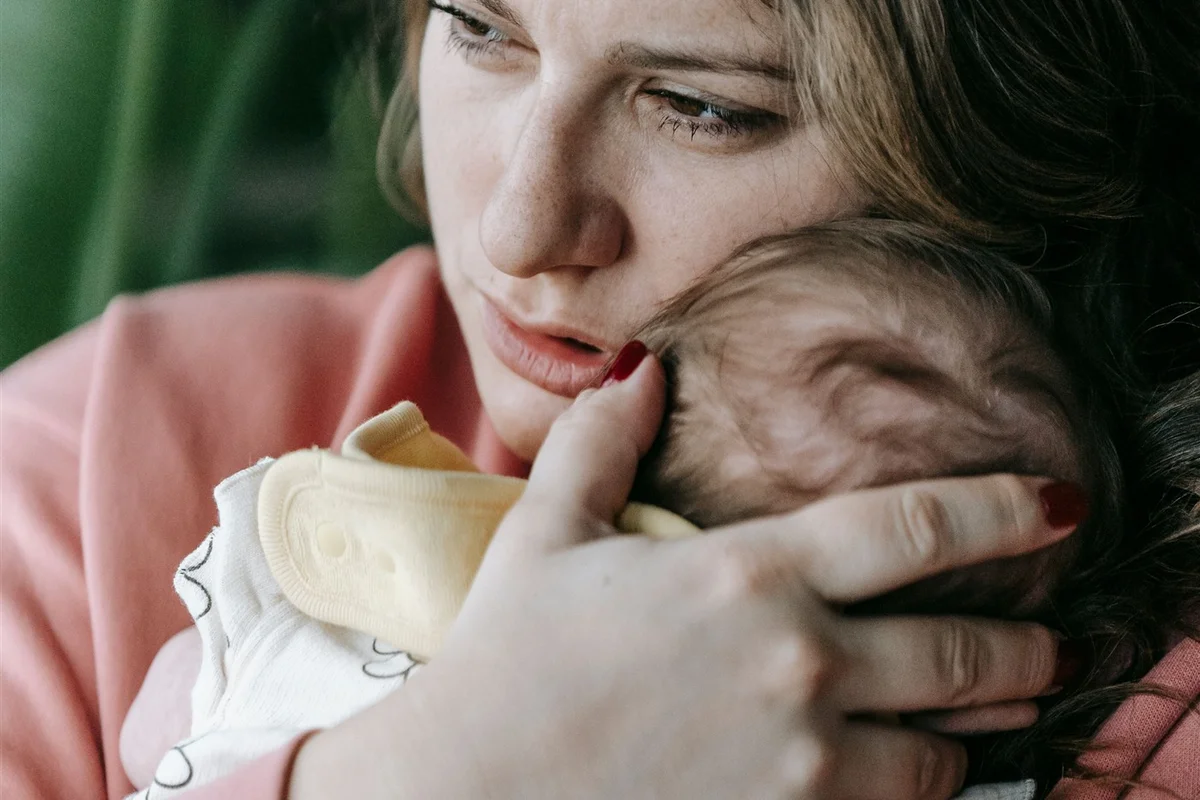
Postpartum depression is not "weakness" or "being dramatic"; it is a health condition that deserves attention and support. This article helps mothers and families recognize early signs and know how to help.
How is postpartum sadness different from postpartum depression?
- Postpartum sadness: very common, appearing in the first few days after birth with feelings of tearfulness, frequent worry and mood swings. It usually resolves on its own within about 2 weeks when the mother rests and receives support.
- Postpartum depression: sad, empty and anxious feelings lasting longer than 2 weeks, gradually worsening and affecting self-care and caring for the baby. It can occur at any time during the first year after birth.
Signs to watch for
- Feeling sad, crying often, and feeling empty or hopeless most of the day.
- Losing interest in everything, including the baby.
- Insomnia even though the baby is sleeping, or sleeping too much; fatigue and exhaustion.
- Eating too little or too much.
- Excessive worry, irritability, panic.
- Feeling like a bad mother, guilty, useless.
- Difficulty bonding with the baby, reluctance to hold the baby.
- Thoughts of harming yourself or the baby: immediate help is needed.
Who is at risk of postpartum depression?
- A history of depression or anxiety, before or during pregnancy.
- Lack of support from the husband and family; family conflict.
- Financial difficulties, work pressure.
- A difficult birth, premature birth, a sick baby, or difficulty breastfeeding.
- Prolonged sleep deprivation.
What can the family do?
- Listen without judging, avoiding remarks such as "everyone goes through this when they have a baby."
- Share the housework and take turns caring for the baby at night so the mother can sleep.
- Encourage the mother to eat well, go out for walks and meet friends.
- Watch for unusual changes and take the mother for an examination early.
- Do not leave the mother alone when she has negative thoughts.
When should she see a doctor?
When the signs last longer than 2 weeks or affect self-care and caring for the baby, the mother should be examined by a doctor. Postpartum depression can be treated effectively with psychological counseling and methods suitable for breastfeeding mothers. If there are thoughts of harming yourself or the baby, go to a medical facility immediately. The family can bring the mother for a direct examination during opening hours at Ky Hoa Medical Center, 266A - 268 3 Thang 2 Street, Hoa Hung Ward, Ho Chi Minh City. Hotline 028.3868.1097, Zalo 082.299.3377.