
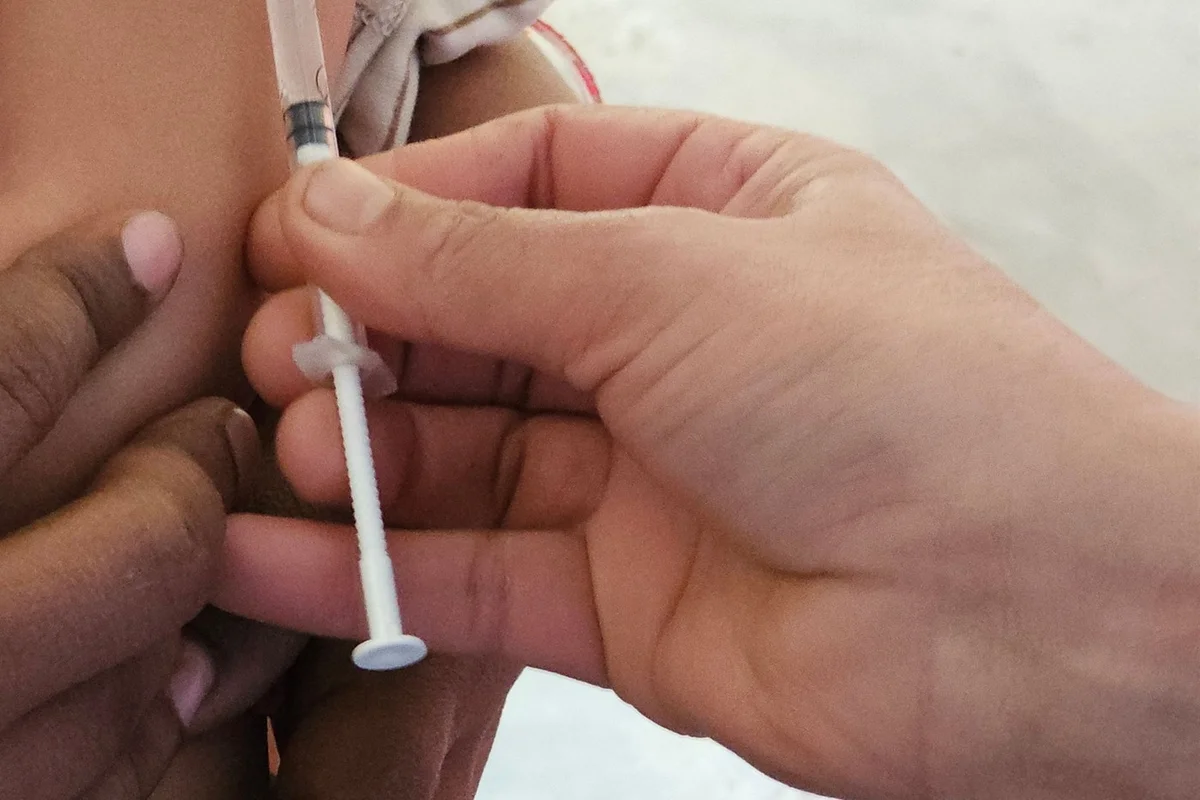
Complete and on-schedule vaccination is an effective way to protect children from many dangerous infectious diseases. This article helps parents understand why full vaccination is necessary, what to do if a schedule is missed, and how to care for a child after vaccination.
Why do children need vaccination?
Young children have an immature immune system, so they are more susceptible to diseases such as measles, pertussis, diphtheria, tetanus, hepatitis B, meningitis, and pneumonia, and are more likely to develop serious complications. Vaccines help the child's body "get familiar" with the pathogen beforehand to create protective antibodies. When many children in the community are vaccinated, outbreaks are less likely to occur, protecting even children who are not yet old enough to be vaccinated.
Why is it important to get all doses on schedule?
- Many vaccines require multiple doses to build full immunity; missing a dose means the protection is incomplete.
- The vaccination schedule is designed around the ages when children are most vulnerable to disease; a late injection leaves the child "exposed" during the period of risk.
- Some doses need to be repeated as the child grows older to maintain immunity.
Parents should keep the vaccination record carefully and bring it along every time the child goes for vaccination or a check-up.
What if a vaccination schedule is missed?
If your child falls behind the schedule due to illness or other reasons, there is no need to worry excessively. In most cases, there is no need to start over from the beginning; only the missed doses need to be made up as soon as possible, following the advice of health professionals.
Before and after vaccination
- Inform health professionals if your child currently has a fever, is ill, has a history of allergies, or has reacted to a previous dose.
- Feed the child well and dress them in loose clothing that makes the injection site easy to expose.
- Stay for 30 minutes of observation at the vaccination site.
- Continue monitoring at home for at least 24 to 48 hours: mild fever, fussiness and crying, and redness and swelling at the injection site are common reactions.
- Do not apply heat, herbal leaves, or oils to the injection site.
- Let the child breastfeed or drink more fluids; use fever-reducing medication when needed as directed by health professionals.
Signs that require taking the child to a medical facility immediately
- High fever above 39 degrees C, prolonged fever.
- Prolonged piercing cries lasting more than 3 hours, lethargy, refusal to feed.
- Difficulty breathing, cyanosis, widespread rash, convulsions.
- The injection site is markedly swollen, redness spreads, or pus forms.
Parents who need advice on their child's health before vaccination can bring the child in for a direct examination during opening hours at Ky Hoa Medical Center, 266A - 268 3 Thang 2 Street, Hoa Hung Ward, Ho Chi Minh City. Hotline 028.3868.1097, Zalo 082.299.3377.