

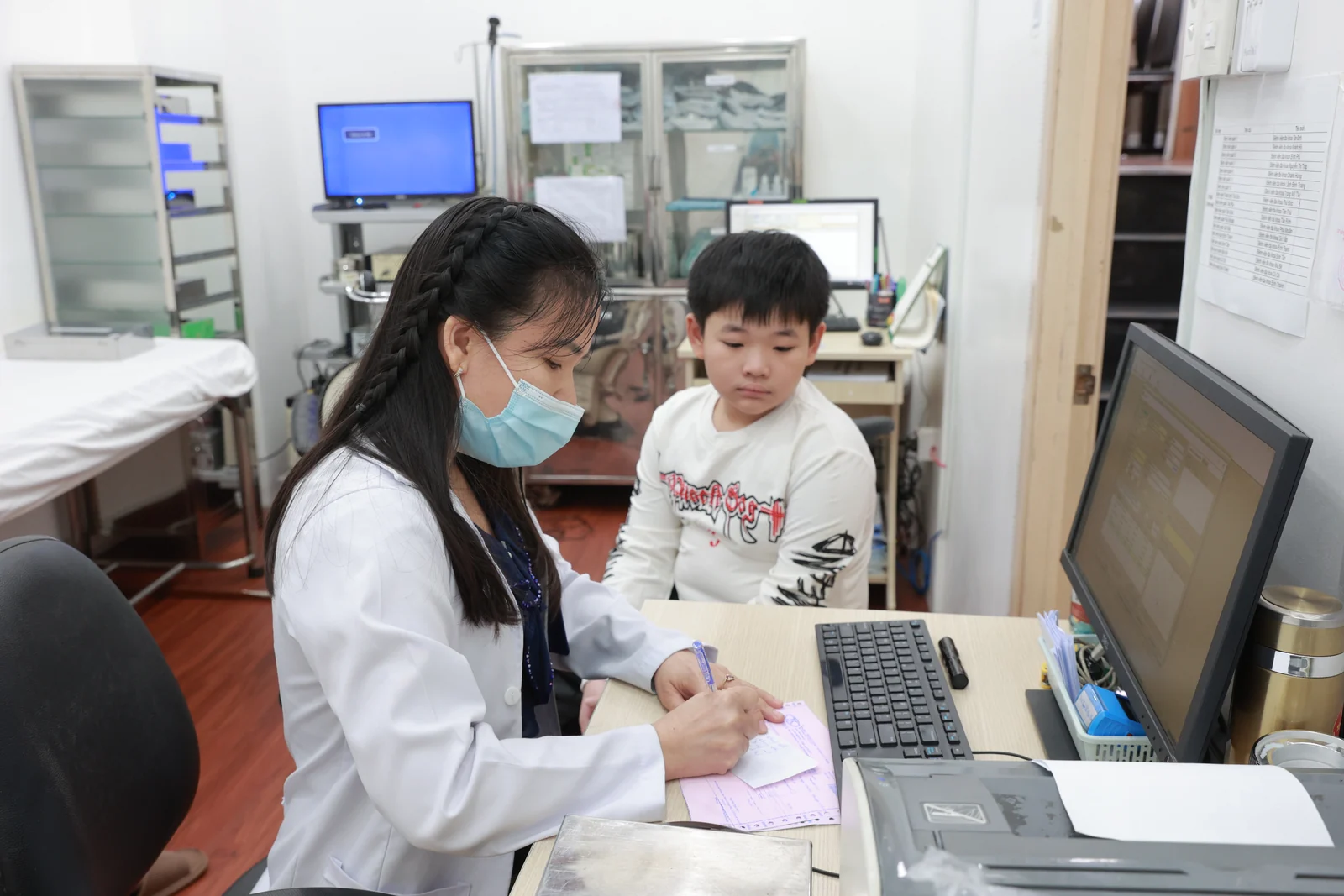
Occasional snoring during a cold is usually harmless. If your child snores loudly most nights, with breathing pauses or restless sleep, have them checked.
Snoring during sleep is quite common in children. The sound happens when the airway narrows, making the soft tissue in the throat vibrate during sleep. Most cases of passing snoring are harmless, but long-lasting snoring with difficulty breathing, pauses in breathing or restless sleep may be a sign that your child has a sleep-related breathing disorder.
Temporary snoring and persistent snoring
Snoring does not always mean illness. Parents should notice how often their child snores, how loud it is and what other signs come with it.
- Temporary snoring: appears for a few days when the child has a cold, an upper respiratory infection, a stuffy nose or an allergy that narrows the airway. Once these clear up, the snoring gets quieter or goes away completely.
- Persistent snoring: is usually linked to a problem in the upper airway, most often oversized tonsils or adenoids, allergic rhinitis, an abnormal airway structure, or being overweight or obese. Some children have a sleep-related breathing disorder, a common form of which is obstructive sleep apnea.
So do not assume that snoring is normal and that your child will grow out of it. If your child snores almost every night, or sometimes stops breathing, take them to a doctor to find the cause.

How persistent snoring affects your child
With a sleep-related breathing disorder, airflow through the airway is obstructed. In obstructive sleep apnea, the airway may narrow or become partly blocked, sometimes fully blocked for a few seconds, and this happens again and again through the night. Each time, the oxygen level in the blood may drop, and the child has to breathe harder or briefly wake up to catch their breath. Sleep broken up like this is poor in quality, even if the child sleeps enough hours.
If it goes unnoticed for a long time, this condition can affect your child in many ways:
- Daytime tiredness and poor concentration. The child has trouble reaching deep sleep and is often tired; some children instead become hyperactive, irritable and unable to concentrate rather than sleepy, which affects their schoolwork.
- Bedwetting. If an older child still often wets the bed, especially along with loud snoring or unusual sleep, parents should ask a doctor.
- Slow growth. Some children with long-lasting, severe obstructive sleep apnea may gain weight slowly and grow poorly.
- Weight and metabolism. Excess weight raises the risk of sleep apnea; in turn, long-term poor sleep also affects metabolism, physical activity and weight control.
- Heart and blood vessels. Moderate or more severe sleep apnea, if it continues, is linked to raised blood pressure and changes that are bad for the heart and blood vessels.
- Memory and behavior. Broken sleep and repeated drops in oxygen can make the child less attentive, less able to remember things and less able to control their emotions.
When to take your child to a doctor
- Loud, regular snoring almost every night.
- Pauses in breathing, gasping or snorting during sleep.
- Sleeping with the mouth open, sweating a lot, tossing and turning.
- Often complaining of headaches on waking, or being sleepy or unfocused during the day.
- Slow growth, changes in behavior or falling behind at school.
If your child clearly has trouble breathing, turns blue or stops breathing for a long time, take them to a medical facility right away.
What the doctor will do
Treatment depends on the cause. The doctor will examine the nose and throat, check the tonsils and adenoids, measure height and weight and look for other risk factors; in some cases a sleep study is needed to find out how severe the disorder is. Finding the cause early helps your child sleep better, do better at school and grow up healthy.
Trusted clinic for snoring in children in Ho Chi Minh City
Ky Hoa Medical Center has nearly 20 years of experience in medical care in Ho Chi Minh City, with a team of highly qualified doctors and a careful, transparent way of working. For snoring in children, our Pediatrics and ENT specialists take time to listen, examine carefully and explain clearly so that you fully understand your child's condition, then agree together on a care and follow-up plan.
The center operates under Operating License No. 00449/HCM-GPHĐ, with a list of medical techniques approved by the Ho Chi Minh City Department of Health (Decision 471/QĐ-SYT), and is a primary care facility contracted with Ho Chi Minh City Social Security, accepting health insurance (BHYT) visits on Saturdays as well. The practising certificates of our 24 doctors are published on our Doctors page.
When you notice your child snoring regularly, you can bring them to the ENT (Ear, Nose & Throat) or Pediatrics department at Ky Hoa Medical Center, where a doctor will check their nose, throat and tonsils and advise on how to manage it. Simply walk in during opening hours and take a queue number.
Ky Hoa Medical Center
Address: 266A - 268 3 Thang 2 Street, Hoa Hung Ward, Ho Chi Minh City
Opening hours: Monday to Saturday, 6:30 - 11:30 and 13:00 - 17:00 (closed on Sunday)
Hotline: 028.3868.1097
Source: Suc Khoe & Doi Song (Health & Life) newspaper