


Blue lips, fast breathing, poor feeding and slow weight gain may signal congenital heart disease. Some babies show signs at birth; in others they stay subtle.
Congenital heart disease covers defects in the structure or function of the heart and the large blood vessels that form while the baby is still in the womb. It ranges in severity: some mild defects only need monitoring and no immediate intervention, while severe defects need early treatment. Because symptoms are not always obvious, parents should watch for changes in how their child feeds, breathes and grows.
Four signs to watch for
Bluish lips, fingertips and toes. This is an important sign in some heart conditions that leave the blood short of oxygen. The baby's lips, tongue, fingertips or toes look unusually blue or purple, more clearly when the baby cries, feeds or moves. Even so, a bluish color is not always caused by the heart; a child's skin can change color when cold or for other reasons. If the bluish color lasts, keeps coming back or comes with difficulty breathing, sluggishness or poor feeding, take your child to a doctor early.
Fast breathing, difficulty breathing, tiring easily. Newborns may have to stop feeding many times to breathe, sweat while feeding or tire quickly. Older children tire more easily when running and playing than other children their age, or often have to stop and rest partway.
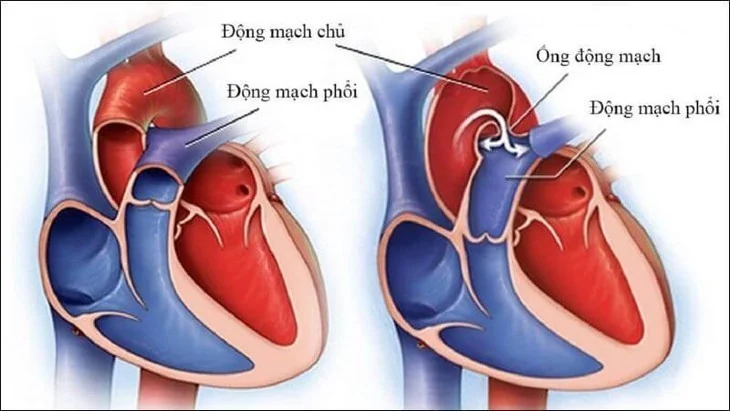
However, fast or difficult breathing is also seen in pneumonia, bronchitis and asthma. So take your child to a doctor to find the real cause rather than jumping to the conclusion that it is heart disease.
Poor feeding, slow weight gain. The baby gets tired after feeding only a little, has to pause many times, takes a long time at each feed or is often damp with sweat. Because the heart and lungs have to work harder and use a lot of energy, some children gain weight slowly and do not keep up with normal growth for their age. Of course, poor feeding and slow weight gain can also be caused by digestive problems, infections, nutrition or other illnesses; if your child's weight gain stays poor for a long time, take them to a doctor for a full assessment.
Persistent cough, frequent respiratory infections. Some children with congenital heart disease cough for a long time or often have bouts of respiratory infection. This is not a sign specific to heart disease, so a cough alone cannot be used to draw conclusions. When a child has a long-lasting cough along with fast breathing, poor eating or needs repeated treatment for respiratory illness, the doctor may need to check both the heart and the lungs.
Some children have no symptoms
A few mild forms of congenital heart disease cause no signs at first. The child eats, plays and grows almost normally, and the condition is only found by chance at a health checkup or when the doctor hears an unusual heart sound.
That is why full prenatal checkups and screening for congenital heart disease before birth when indicated, health checks for the baby after birth, and taking your child to a doctor when something seems wrong are all very worthwhile. If your child has been diagnosed, take them back for follow-up visits on the dates the doctor gives. Not every child needs surgery; the approach depends on the type of defect, how much it affects the heart and the child's overall health.
When to see a doctor right away
- Clearly blue skin or sudden blueness.
- Very fast breathing, difficulty breathing, signs of respiratory distress.
- Sluggishness, fainting.
- Very poor feeding or refusing to feed.
For newborns, if the baby turns blue, has difficulty breathing, refuses to feed or weakens quickly, they need emergency care without delay.
Trusted clinic for children's health check-ups in Ho Chi Minh City
Ky Hoa Medical Center has nearly 20 years of experience in medical care in Ho Chi Minh City, with a team of highly qualified doctors and a careful, transparent way of working. For children's health check-ups, our Pediatrics doctors take time to listen, examine carefully and explain clearly so that you fully understand your child's condition, then agree together on a care and follow-up plan.
The center operates under Operating License No. 00449/HCM-GPHĐ, with a list of medical techniques approved by the Ho Chi Minh City Department of Health (Decision 471/QĐ-SYT), and is a primary care facility contracted with Ho Chi Minh City Social Security, accepting health insurance (BHYT) visits on Saturdays as well. The practising certificates of our 24 doctors are published on our Doctors page.
Parents should not take unusual signs in their child lightly, but there is also no need to worry too much over a single symptom. When needed, you can bring your child to the Pediatrics department at Ky Hoa Medical Center, where a doctor will examine them, order an ultrasound or suitable laboratory tests and advise on further monitoring. Simply walk in during opening hours and take a queue number.
Ky Hoa Medical Center
Address: 266A - 268 3 Thang 2 Street, Hoa Hung Ward, Ho Chi Minh City
Opening hours: Monday to Saturday, 6:30 - 11:30 and 13:00 - 17:00 (closed on Sunday)
Hotline: 028.3868.1097
Source: Suc Khoe & Doi Song (Health & Life) newspaper