

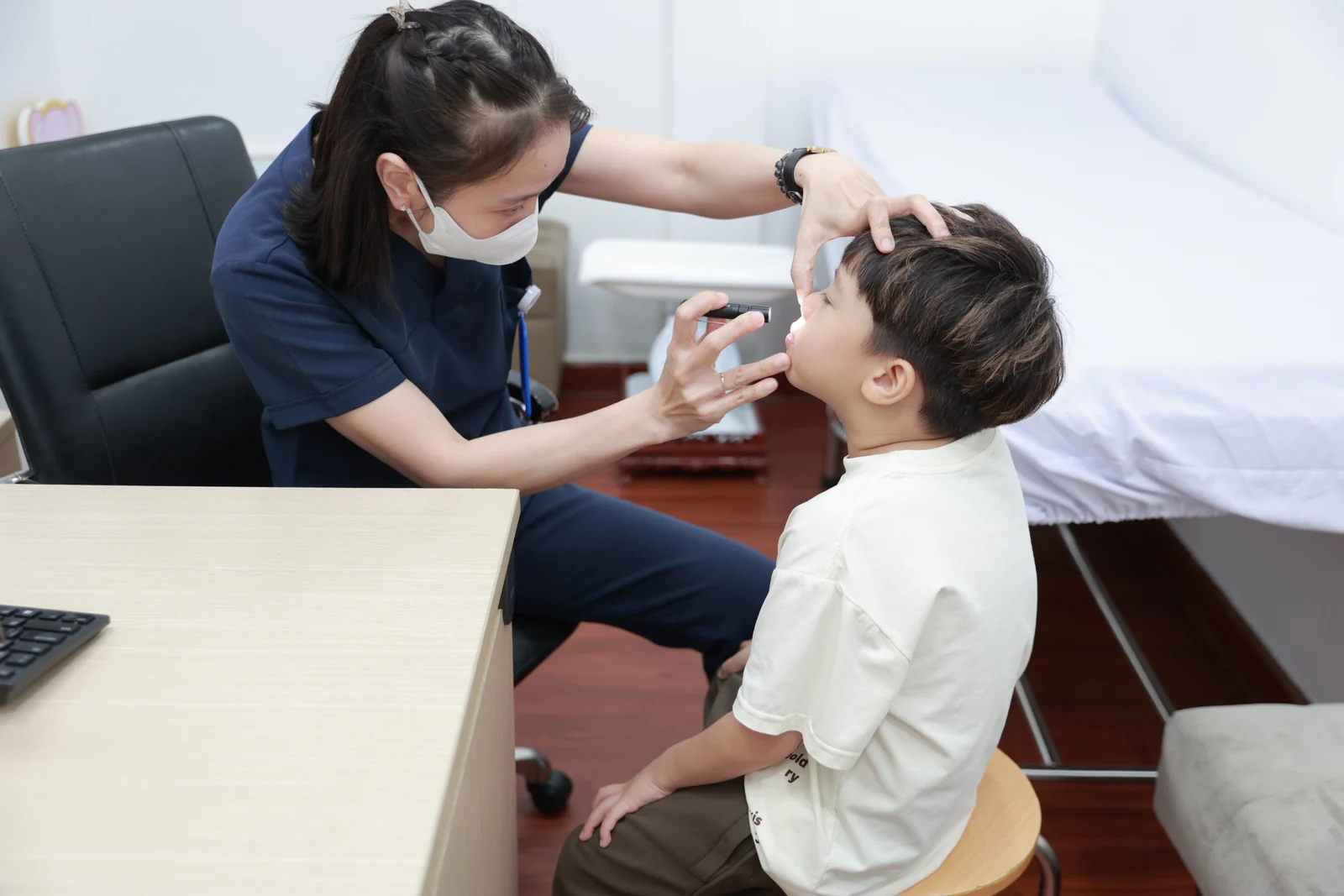
Daily outdoor play is a simple way to lower a child's risk of developing nearsightedness. So how much time is enough, and what should parents keep in mind?
Nearsightedness (myopia) in children is influenced by many factors, such as genetics, living environment and daily habits. Children who spend most of their time looking at things up close and rarely go outside are more likely to become nearsighted. Increasing outdoor playtime is therefore an easy step that the whole family can build into daily life.
How daylight helps children's eyes
In a nearsighted eye, the image of a distant object does not focus exactly on the retina but falls in front of it. A common reason is that the eyeball is longer than normal. Nearsighted children therefore cannot see far away clearly, but still see quite well up close.
Many studies have found that children who spend more time outdoors are less likely to develop nearsightedness than those who rarely go outside. The World Health Organization (WHO) also considers more outdoor time for children as one of the ways that may help delay the onset of nearsightedness and slow its progression.
Why this happens has not yet been fully explained. One theory is that natural light acts on certain biological signals in the retina, which in turn affects how much the eyeball lengthens. Even so, parents should not take this to mean that simply sending a child out into the sun will prevent nearsightedness.
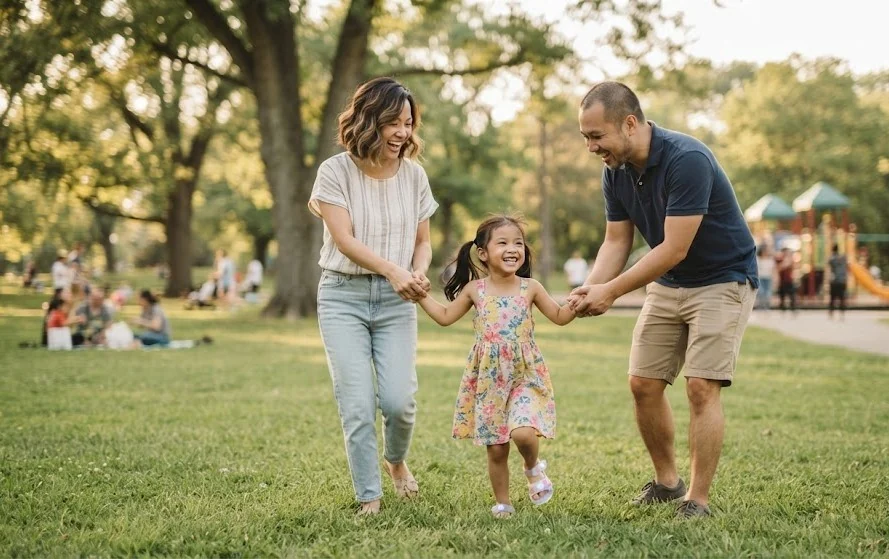
It is also worth remembering that the main benefit lies in reducing the risk of becoming nearsighted in the first place. For children who are already nearsighted, outdoor play is still good for their overall health, but it cannot replace prescription glasses or the myopia control measures recommended by an eye doctor.
How much time each day is enough
According to current WHO recommendations, children should spend at least 90 minutes outdoors in daylight every day. This does not have to be all at once; it can be split into several shorter periods.
- Walking, cycling, playing football or running around in a park or schoolyard all count. Children do not need to exercise hard; what matters is actually being outdoors and getting daylight.
- Going out regularly every day is more helpful than packing it all into the weekend. For schoolchildren, you can make use of the time before and after school, break time and the late afternoon.
- Do not let children stay in harsh sunlight for too long. Avoid the midday sun, choose shady spots and use suitable sun protection when outdoors for a long time. Being outdoors does not mean looking straight at the sun.
Daily habits that help reduce the risk of nearsightedness
Alongside outdoor time, parents should help their children build good habits when studying, reading and using electronic devices:
- Regular eye breaks: after a stretch of continuous studying or screen time, remind your child to switch activities and look into the distance.
- Keep a good distance: remind your child not to press their face close to the page or hold a phone or tablet too close to their eyes.
- Good lighting: the study area should be bright enough that your child does not have to strain or squint when reading.
Signs your child needs a vision test
Pay attention if your child often squints when looking at things far away, likes to sit close to the TV or screens, holds books close to their face, complains about not being able to read the board or asks to change seats. If you notice these signs, take your child for a vision test.
Children who are already nearsighted need to wear glasses as prescribed and return for check-ups on the dates the doctor gives. The doctor will assess the degree of nearsightedness, monitor changes in vision and, when needed, consider additional suitable ways to control it.
Trusted clinic for myopia in children in Ho Chi Minh City
With nearly 20 years of experience and a team of highly qualified doctors, Ky Hoa Medical Center is a familiar choice for many families in Ho Chi Minh City when they need care for myopia in children. Here, our Ophthalmology doctors take time to listen, examine carefully and explain clearly so that you fully understand your child's condition, then agree together on a care and follow-up plan.
The center operates under Operating License No. 00449/HCM-GPHĐ, with a list of medical techniques approved by the Ho Chi Minh City Department of Health (Decision 471/QĐ-SYT), and is a primary care facility contracted with Ho Chi Minh City Social Security, accepting health insurance (BHYT) visits on Saturdays as well. The practising certificates of our 24 doctors are published on our Doctors page.
When your child shows any of the signs of poor vision described above, simply walk in during opening hours and take a queue number at Ky Hoa Medical Center, where an Ophthalmology doctor will check your child's vision and advise on caring for their eyes.
Ky Hoa Medical Center
Address: 266A - 268 3 Thang 2 Street, Hoa Hung Ward, Ho Chi Minh City
Opening hours: Monday to Saturday, 6:30 - 11:30 and 13:00 - 17:00 (closed on Sunday)
Hotline: 028.3868.1097
Source: Suc Khoe & Doi Song (Health & Life) newspaper