

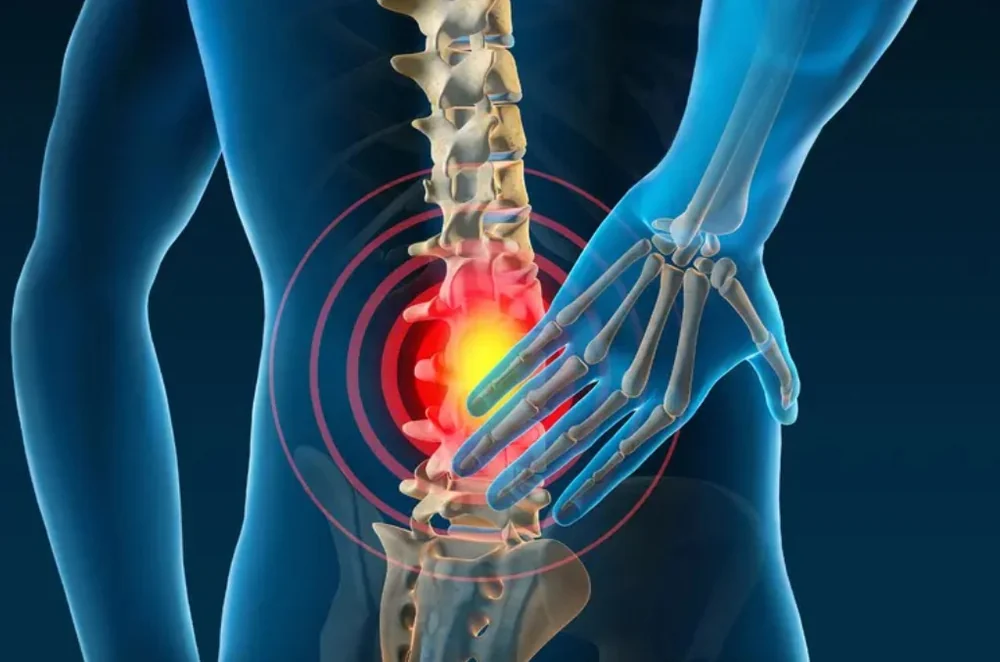
Lower back pain is mostly musculoskeletal, but it sometimes signals a condition that needs early treatment. Warning signs tell you when to get checked.
The lower back is made up of the L1 to L5 vertebrae, which support the body and take part in almost every movement. The pain may come from muscles, tendons, ligaments, discs, the spine itself, nerves, or another organ. Many people are used to resting or buying medicine on their own to ease it, and only see a doctor once walking becomes difficult. Because nerves run from this area down to the legs, when a nerve is compressed, the pain can spread downward, with numbness and weakness in the legs.
Common mechanical causes
- Non-specific lower back pain: the most common type, caused by muscle strain, sprains, overexertion or holding an unsuitable posture. The pain is mild to moderate, worse with movement and better with rest.
- Lumbar spondylosis (wear and tear of the lower spine): usually seen in older people, but those who are overweight, inactive or work in poor postures may develop it earlier. The pain is dull, worse with activity, and may later spread to the buttocks and thighs, with numbness and stiffness.
- Herniated disc: the soft inner core of a disc bulges out and presses on a nerve root, causing pain that runs from the back down through the buttock, thigh, calf and foot, with numbness and tingling. Severe compression can weaken the legs or disturb bladder and bowel control, and requires emergency care.
- Spinal stenosis: common in older people due to degeneration. Pain, numbness and leg weakness get worse when standing or walking for a long time and ease when sitting down or leaning forward.
- Osteoporosis and vertebral compression fractures: postmenopausal women and older people are more at risk. Even a minor bump, or no clear injury at all, can make a vertebra collapse, causing sudden back pain and difficulty moving.
- Injury: falls, accidents or lifting heavy objects the wrong way can damage vertebrae, discs and ligaments; in severe cases nerves are compressed, causing weakness or paralysis of the arms or legs.
Inflammation, infection and cancer
Axial spondyloarthritis, typically ankylosing spondylitis, often starts in young people. The key features to watch for are back pain and stiffness at night, prolonged morning stiffness, improvement with movement and worsening when lying still.
Infection of the vertebrae and discs (spondylodiscitis) caused by bacteria or tuberculosis leads to persistent back pain, sometimes with fever, fatigue and pain that worsens at night. People with underlying conditions or weak resistance are more susceptible, and the disease needs to be detected and treated promptly.
Cancer that has spread to the spine causes pain that gradually worsens, is more noticeable at night or when resting, does not respond to the usual pain relief, and may come with unexplained weight loss. Anyone with a history of cancer who develops new or unusual back pain should see a doctor; when damage to the spine or nerves is suspected, MRI is particularly useful.
Conditions outside the spine can also cause back pain
Kidney stones, kidney infection (often with urinary symptoms), appendicitis (abdominal pain that sometimes spreads to the back) and certain digestive, urinary and gynecological conditions can cause pain in the lower back or the side of the hip. In women, endometriosis, pelvic inflammatory disease or some uterine conditions can also cause lower back pain.
Signs you should see a doctor right away
Back pain usually gets worse when bending, twisting, or standing or sitting for long periods. If it hurts even at rest, especially at night to the point of disturbing sleep, or the back is noticeably stiff every morning, you should see a doctor. It is even more important to go early if back pain comes with any of these signs:
- Weakness or paralysis in the legs, or difficulty walking.
- Problems with, or loss of control over, urination or bowel movements.
- Numbness around the anus or genitals.
- High fever, chills or exhaustion.
- Pain after a fall, an accident or a hard knock.
- Pain that lasts and worsens, unexplained weight loss, or severe pain at night.
Trusted clinic for back pain in Ho Chi Minh City
Ky Hoa Medical Center has nearly 20 years of experience in medical care in Ho Chi Minh City, with a team of highly qualified doctors and a careful, transparent way of working. For back pain, our Internal Medicine and Surgery specialists take time to listen, examine carefully and explain clearly so that you fully understand your condition, then agree together on a treatment and follow-up plan.
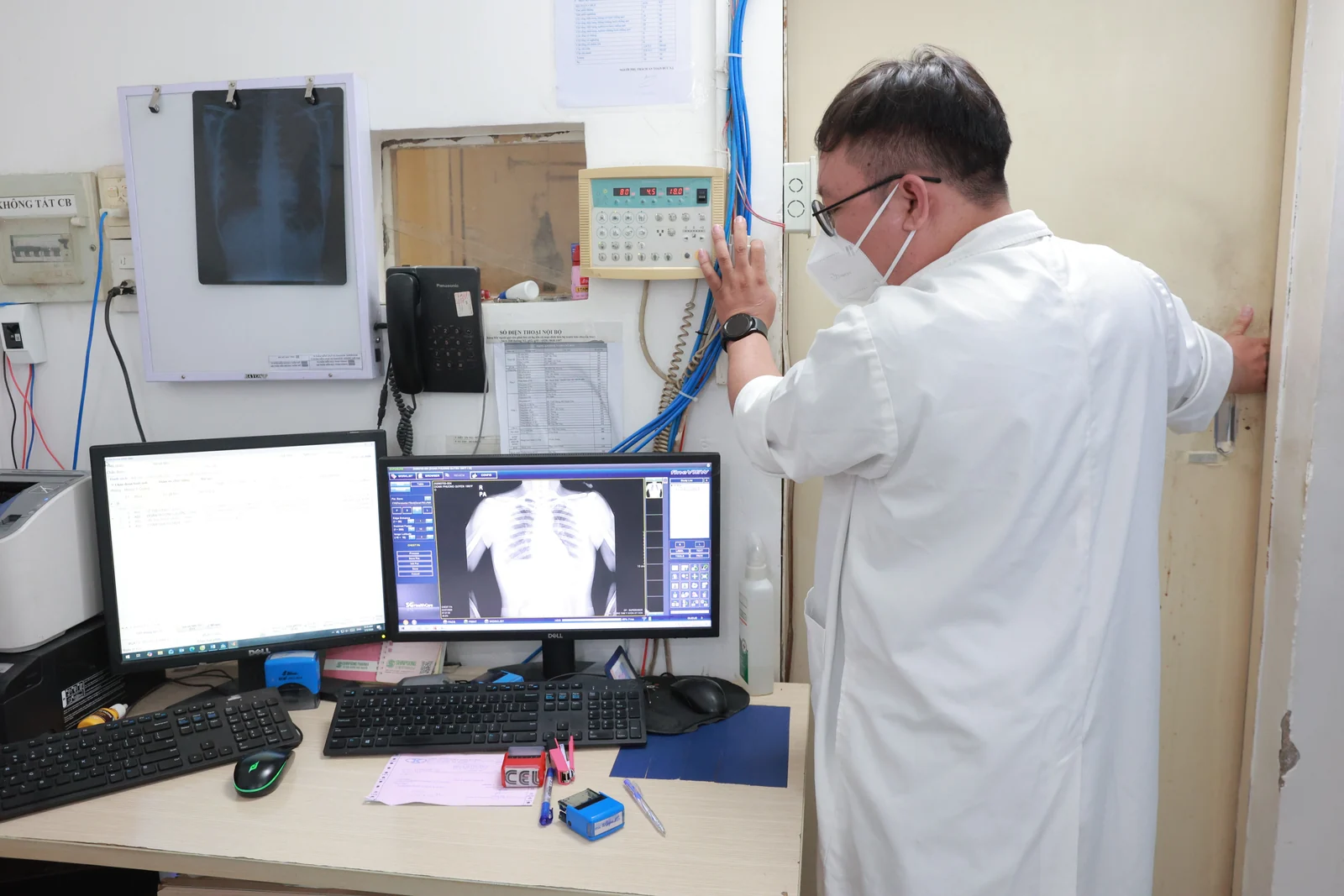
Digital X-ray is performed on site, so you can complete check-ups in one place, which makes follow-up visits easier.
The center operates under Operating License No. 00449/HCM-GPHĐ, with a list of medical techniques approved by the Ho Chi Minh City Department of Health (Decision 471/QĐ-SYT), and is a primary care facility contracted with Ho Chi Minh City Social Security, accepting health insurance (BHYT) visits on Saturdays as well. The practising certificates of our 24 doctors are published on our Doctors page.
When back pain lasts a long time or comes with unusual signs, you can come to Ky Hoa Medical Center to see a doctor in Internal Medicine or Surgery: simply walk in during opening hours and take a queue number. Depending on your condition, the doctor will order an X-ray, ultrasound or suitable laboratory tests to find the real cause.
Ky Hoa Medical Center
Address: 266A - 268 3 Thang 2 Street, Hoa Hung Ward, Ho Chi Minh City
Opening hours: Monday to Saturday, 6:30 - 11:30 and 13:00 - 17:00 (closed on Sunday)
Hotline: 028.3868.1097
Source: Suc Khoe & Doi Song (Health & Life) newspaper