

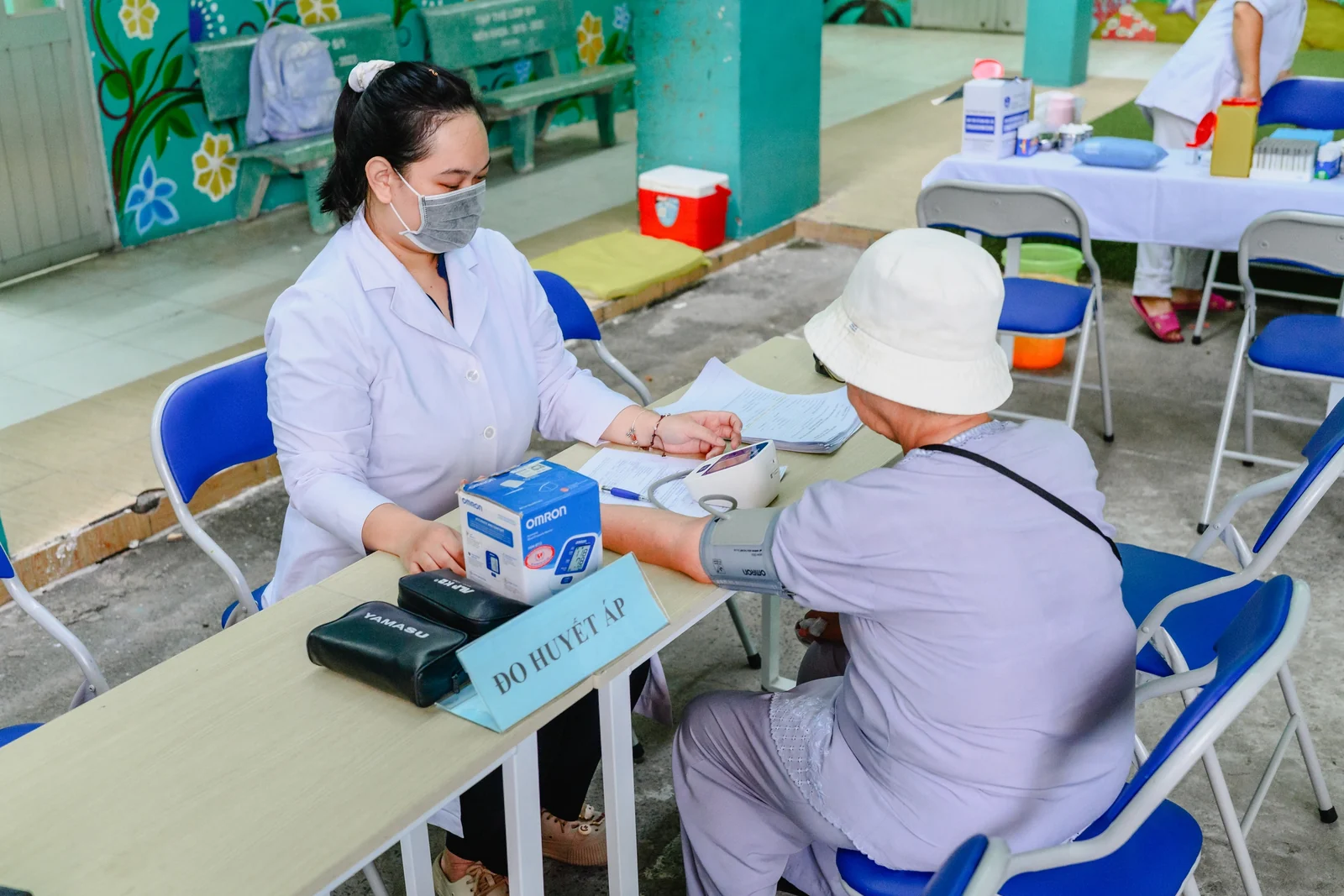
After 50, bone is lost faster than it is rebuilt. With a sensible diet, the right exercise strengthens bones and muscles, improves balance and lowers fall risk.
Why exercise matters after 50
Past the age of 50, bone breaks down faster than it is rebuilt, so the risk of osteoporosis gradually rises. In women, bone is lost quickly after menopause as estrogen falls; in men, the gradual loss of muscle and strength makes falls and fractures more likely. Alongside medication when prescribed by a doctor, it is worth keeping up three groups of exercise: weight-bearing exercise, strength training and balance training.
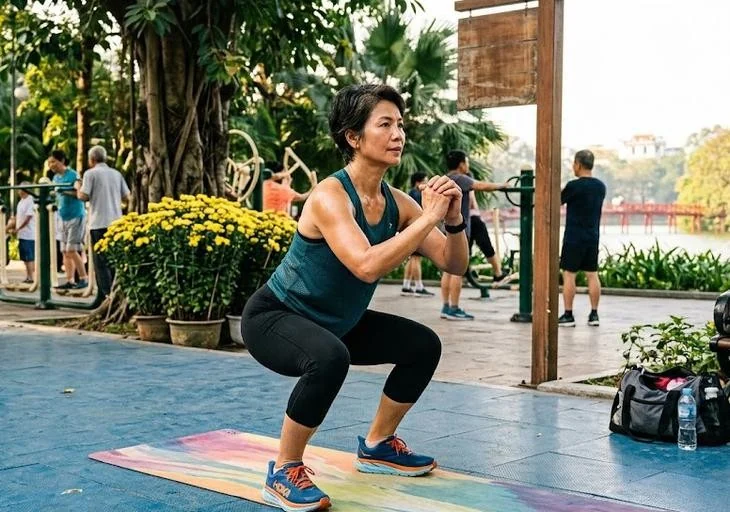
Squats and kettlebell deadlifts
Squats strengthen the thigh, buttock and hip muscles and put load on the hip and thigh bones, two sites that are prone to osteoporosis and fractures. How to do them:
- Stand with your feet shoulder-width apart, toes turned slightly outward.
- Lower your hips as if about to sit on a chair; keep your back straight and chest open, knees in line with your toes, and do not push your knees too far forward.
- Go down until your thighs are nearly parallel to the floor, then push through your heels to stand up.
Beginners should start without weights, or practise sitting down on and standing up from a chair, and only hold a light weight once they are used to it.
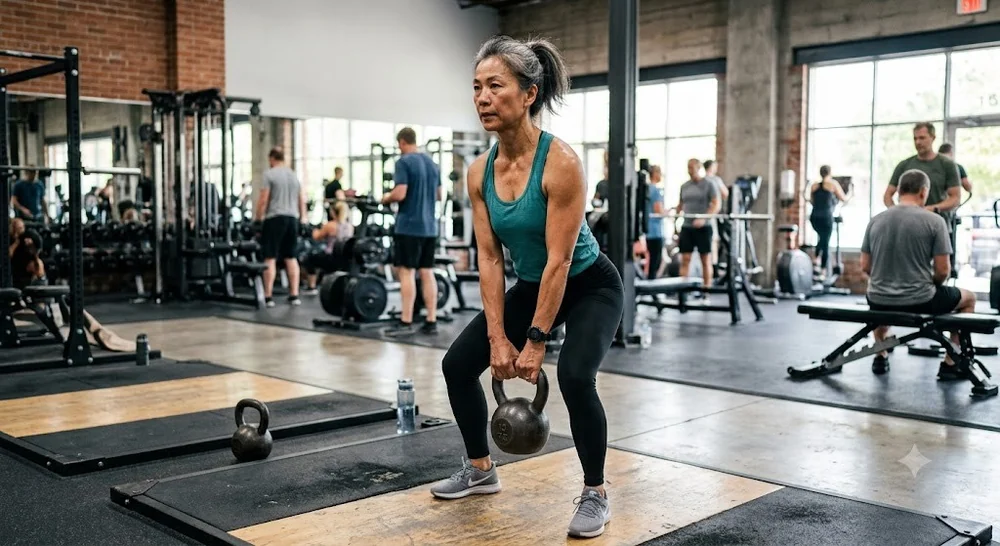
Kettlebell deadlifts strengthen the back, buttocks and backs of the thighs while placing load on the hips and spine, helping maintain bone density. This exercise requires correct technique: stand with your feet hip-width apart and the kettlebell close in front of your shins; hinge at the hips and bend your knees slightly to grip it, keep your back in its natural straight position, tighten your stomach, then extend your hips and knees to stand up straight; lower the weight along the same path, always keeping it close to your body. People over 50 or with spinal conditions should ask a doctor before trying it.
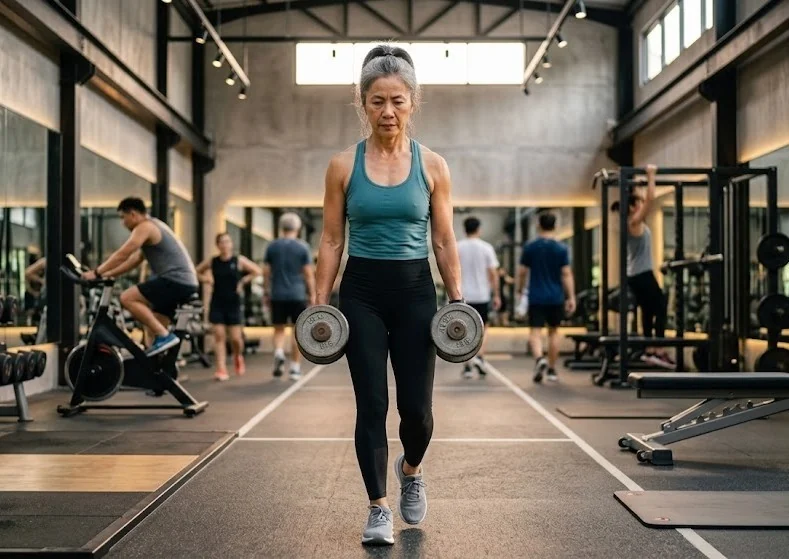
Weighted walking and stair climbing
Walking while carrying weights strengthens the core and shoulder muscles, supports an upright posture and puts natural compression on the spine, stimulating bone renewal. Hold a weight in each hand, stand tall, tighten your stomach and walk at a normal pace for about 20-40 m or 30-60 seconds, avoiding leaning or swaying.
Climbing stairs is simple but useful, strengthening the legs, keeping you mobile and helping maintain bone density. Step up one stair at a time at a moderate pace, placing your whole foot on the step and using your leg strength to push your body up, keeping your torso upright. Go down slowly to protect your knees; anyone with poor balance should hold the handrail.

Planks and brisk walking
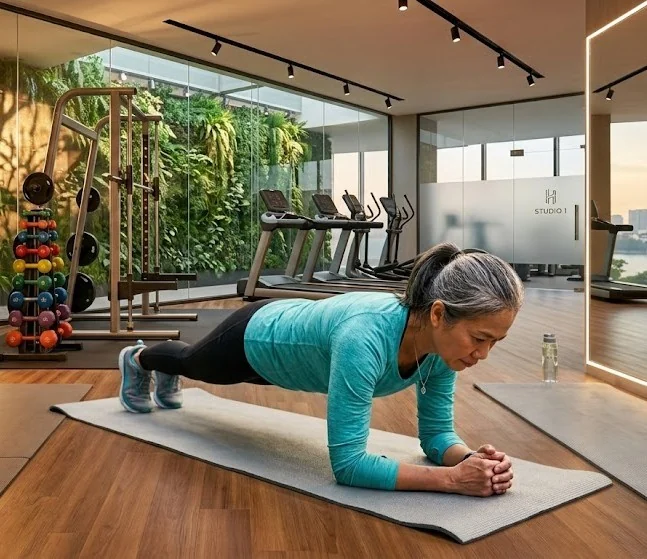
Planks strengthen the core (abdomen, back and pelvic area), helping keep the spine stable and posture upright, and making falls less likely. Lie face down and rest on your forearms so that your elbows are directly under your shoulders; stretch your legs back and lift your body into a straight line from head to heels. Tighten your stomach, and do not let your back sag or push your hips up. Beginners can hold for 15-30 seconds, then gradually increase.
Brisk walking does not load the bones as strongly as strength training, but it is good for the heart, maintains mobility and helps prevent falls. Walk fast enough that your heart rate and breathing increase but you can still talk; stand tall, swing your arms naturally, land on your heel and then shift your weight onto your toes. For greater benefit to your bones, combine brisk walking with strength training at least 2-3 sessions a week. Do 2-3 sets of each strength exercise, with 8-12 repetitions per set, using a manageable weight and increasing it gradually.

Tips for exercising safely
- Start light and build up according to your ability; do not choose weights that are too heavy at the beginning.
- Limit alcohol and tobacco.
- Eat meals with enough protein, calcium and vitamin D for your body's needs.
- If your doctor has prescribed medicine for osteoporosis, take it as directed.
- People with severe osteoporosis or a previous spinal fracture should avoid deep bending, strong twisting of the spine and exercises with a risk of impact.
Each week, people over 50 should do at least 150 minutes of moderate activity, plus 2-3 strength training sessions and balance exercises, to keep their bones strong, stay mobile and reduce the risk of fractures later on.
Trusted clinic for osteoporosis after 50 in Ho Chi Minh City
For nearly 20 years, Ky Hoa Medical Center has cared for the health of people in Ho Chi Minh City, bringing together highly qualified doctors who are attentive at every visit. When osteoporosis after 50 needs checking, our Internal Medicine doctors take time to listen, examine carefully and explain clearly so that you fully understand your condition, then agree together on a treatment and follow-up plan.
Laboratory tests is performed on site, so you can complete check-ups in one place, which makes follow-up visits easier.
The center operates under Operating License No. 00449/HCM-GPHĐ, with a list of medical techniques approved by the Ho Chi Minh City Department of Health (Decision 471/QĐ-SYT), and is a primary care facility contracted with Ho Chi Minh City Social Security, accepting health insurance (BHYT) visits on Saturdays as well. The practising certificates of our 24 doctors are published on our Doctors page.
Before you start, especially if you have a bone or joint condition or a chronic illness, you can come to Ky Hoa Medical Center for an Internal Medicine consultation so the doctor can assess your health and advise on a suitable level of exercise. Simply walk in during opening hours and take a queue number.
Ky Hoa Medical Center
Address: 266A - 268 3 Thang 2 Street, Hoa Hung Ward, Ho Chi Minh City
Opening hours: Monday to Saturday, 6:30 - 11:30 and 13:00 - 17:00 (closed on Sunday)
Hotline: 028.3868.1097
Source: Suc Khoe & Doi Song (Health & Life) newspaper