

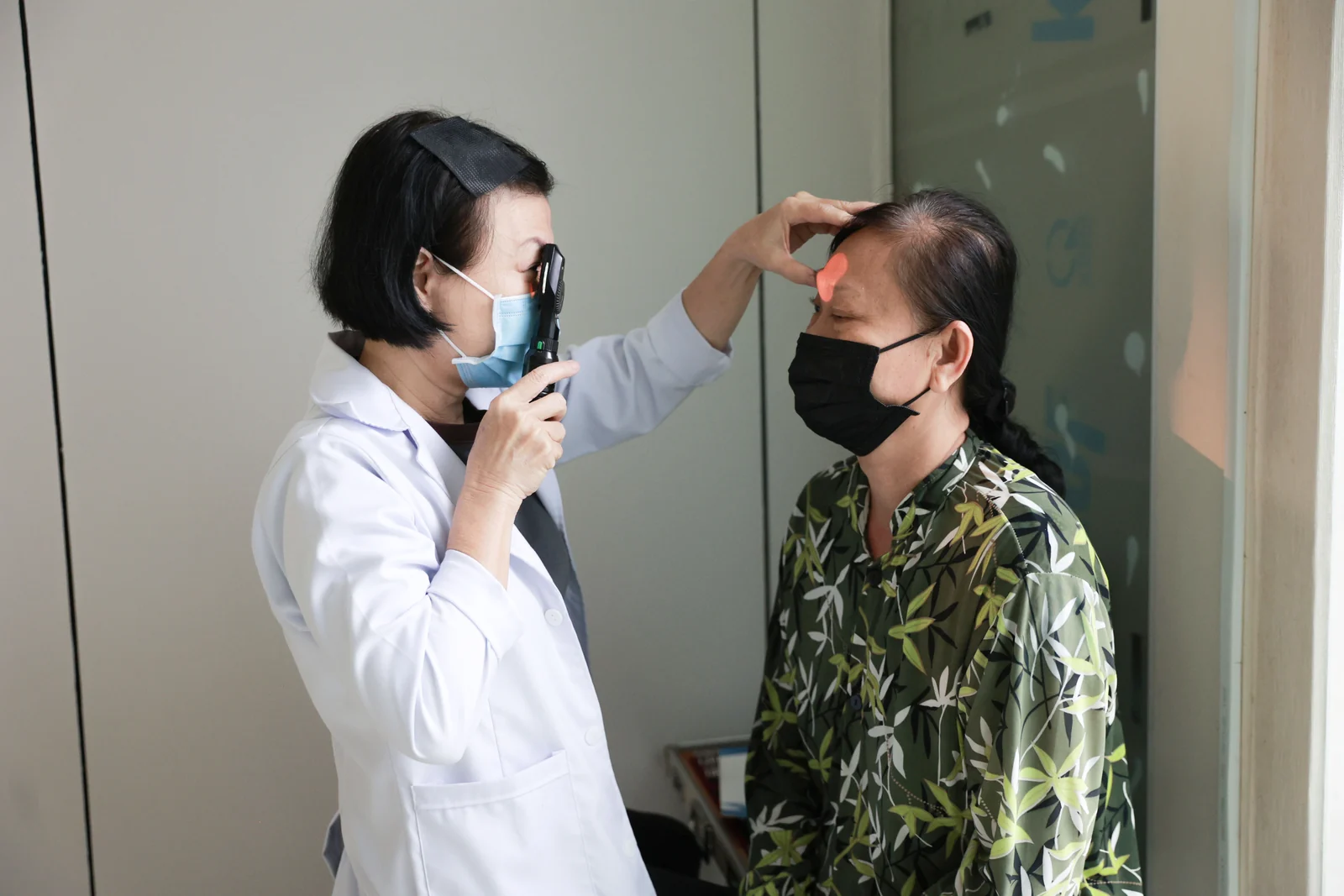
Pink eye spreads mainly through eye discharge on hands and shared items. A few small changes in daily habits help the whole family avoid passing it around.
Pink eye is the everyday name for conjunctivitis, which has many causes, with viruses being a common culprit. When one person at home catches it, the rest of the family can easily follow, mostly because of habits that seem harmless.
Recognizing pink eye
How severe the symptoms are depends on the cause, but people usually have one or more of the following:
- A gritty feeling in the eye, as if there is a speck of dust, which gets more uncomfortable with every blink.
- The white of the eye turns pink or red because the tiny blood vessels in the conjunctiva widen.
- Lots of tears, and crust or discharge that makes the eyelids stick together, most noticeable on waking up.
How the disease spreads
Many people worry that just looking at each other is enough to catch it. In fact, the disease passes from a sick person to a healthy one mainly through contact with tears, crust and discharge from the eyes. For the type caused by adenovirus, the risk of airborne spread is considered low. The most common route is this: the sick person rubs their eyes, the virus gets on their hands, then spreads from their hands to door handles, TV remotes, towels and cups, and from there to other people.
What to do to keep the whole family from catching it
Wearing sunglasses when going out or meeting other people is a simple step. Sunglasses do not cure the disease, but they help the sick person rub their eyes less, which reduces the discharge that gets onto hands and objects, and they also ease the glare when the eyes are gritty and sensitive to sunlight.
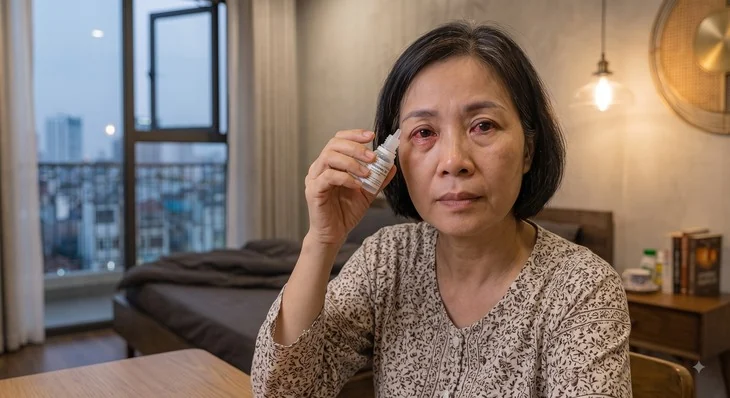
- Keep personal items separate: face towels, cups, bowls, chopsticks, face masks and anything that often touches the face and eyes.
- If only one eye is red, do not use the same towel to wipe both eyes, as this can easily carry discharge to the healthy eye.
- Wash your hands with soap often, especially after touching your eyes or wiping away eye crust.
- Avoid crowded places and limit close contact while you may still be contagious.
For those who have not caught it, after contact with someone who has pink eye or may have it, wash your hands thoroughly with soap and avoid touching your eyes, nose or mouth with unwashed hands. When your eyes start to turn red, feel gritty or produce discharge, see a doctor to find out the exact cause.
Food restrictions and how to use medicine
People with viral pink eye do not need to avoid any particular foods. Instead of cutting out this or that dish, eat a nutritious, balanced diet and keep up good personal hygiene.
Adenovirus is a common cause of acute conjunctivitis, and certain types, such as type 8, have been linked to pink eye outbreaks. Most cases are treated by easing the symptoms and providing supportive care; the doctor only prescribes additional medicine when needed to prevent or treat a secondary bacterial infection. Do not buy eye drops on your own or take medicine on someone's word, because some products can cause harm if used incorrectly. Any medicine should be used only as prescribed by a doctor.
How long it takes for the eyes to recover
When adenovirus is the cause, the eyes usually take at least about 2 weeks to recover. So if your symptoms have not clearly improved after a few days of following the treatment instructions, there is no need to worry too much, nor to rush to change medicines or see another doctor while the illness is progressing as expected.
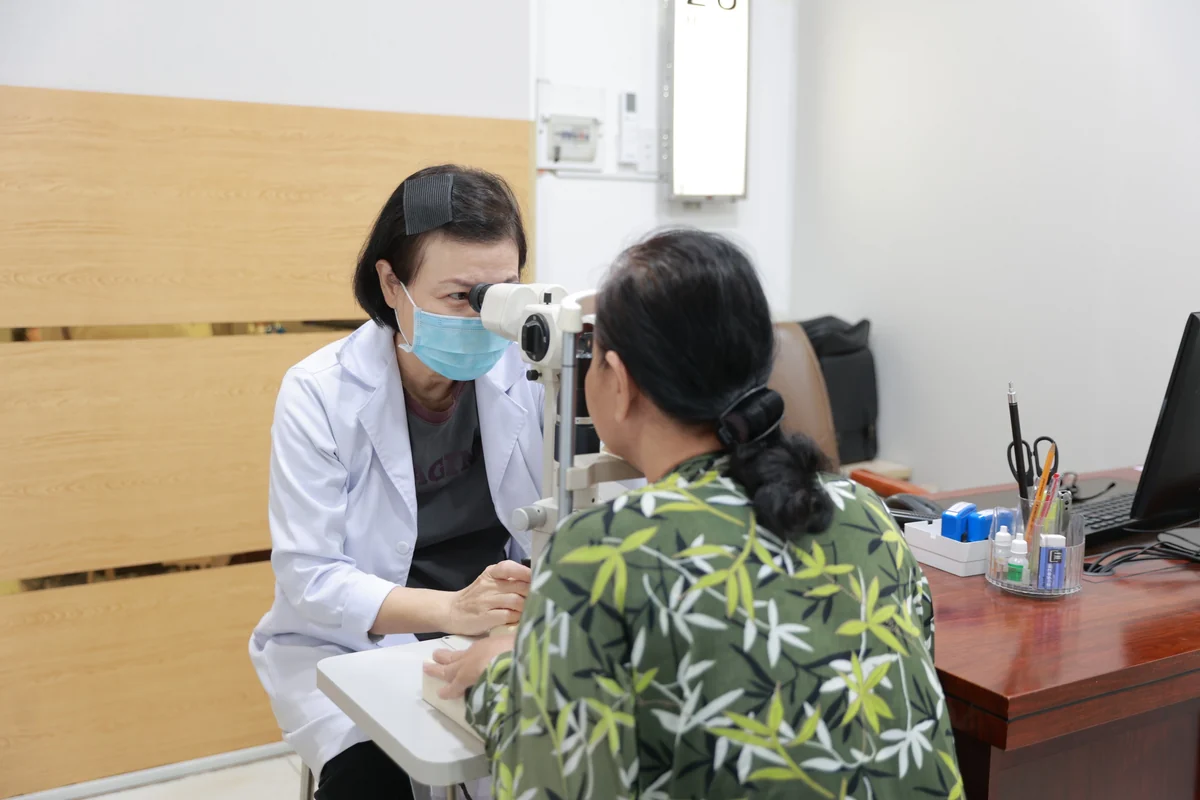
The illness usually goes through two stages. In the acute stage, the eyes are red, crusty, gritty and most irritated. After that, some people may have blurred vision because the cornea is affected: in mild cases the surface layer of the cornea is inflamed, while in more severe cases the damage reaches deeper corneal tissue and needs more time for monitoring and treatment. There is currently no specific treatment that significantly shortens this process, so be patient, follow the instructions closely, and do not stop or add eye drops on your own.
Trusted clinic for pink eye (conjunctivitis) in Ho Chi Minh City
With nearly 20 years of experience and a team of highly qualified doctors, Ky Hoa Medical Center is a familiar choice for many families in Ho Chi Minh City when they need care for pink eye (conjunctivitis). Here, our Ophthalmology doctors take time to listen, examine carefully and explain clearly so that you fully understand your condition, then agree together on a treatment and follow-up plan.
The center operates under Operating License No. 00449/HCM-GPHĐ, with a list of medical techniques approved by the Ho Chi Minh City Department of Health (Decision 471/QĐ-SYT), and is a primary care facility contracted with Ho Chi Minh City Social Security, accepting health insurance (BHYT) visits on Saturdays as well. The practising certificates of our 24 doctors are published on our Doctors page.
If your red eye comes with a lot of pain, your vision is becoming increasingly blurry or your symptoms are getting worse, go back to a doctor early. Ky Hoa Medical Center has an Ophthalmology department; simply walk in during opening hours and take a queue number, and a doctor will examine your eyes, identify the cause and advise on suitable care.
Ky Hoa Medical Center
Address: 266A - 268 3 Thang 2 Street, Hoa Hung Ward, Ho Chi Minh City
Opening hours: Monday to Saturday, 6:30 - 11:30 and 13:00 - 17:00 (closed on Sunday)
Hotline: 028.3868.1097
Source: Suc Khoe & Doi Song (Health & Life) newspaper